… Understanding Carrying Costs: The Unsung Hero of Smart Homebuying
When most people think about buying a home, they focus on one number—the price tag. But seasoned buyers, realtors, and mortgage professionals know that the real story lies beneath the surface. The true cost of owning a home isn’t just the purchase price—it’s the carrying cost, the monthly financial weight that comes with keeping the roof over your head.
That’s why on my website, you’ll find two Carrying Cost Calculators designed to give you clarity and confidence before making that next big move. Whether you’re a homebuyer, investor, or realtor helping clients make informed decisions, understanding these tools can change the way you look at affordability.
Topics Covered
Why There Are Two Carrying Cost Calculators
When These Calculators Are Critical
The Difference Between the Two Calculators
How to Use the Calculators (Step-by-Step)
Real-Life Example: The House That Stretched Too Far
How Realtors and Clients Can Use These Tools
What Are Carrying Costs?
Carrying costs are the ongoing monthly expenses tied to owning a property. Think of them as everything that goes beyond your mortgage payment—property taxes, heating, insurance, condo fees, utilities, and sometimes even maintenance.
When lenders evaluate your mortgage application, they’re not just looking at what you owe—they’re looking at what you can handle every month. Carrying costs are the reality check between your dream home and your actual budget.
Why There Are Two Carrying Cost Calculators
You’ll notice that my website features two different Carrying Cost Calculators, and there’s a good reason for that.
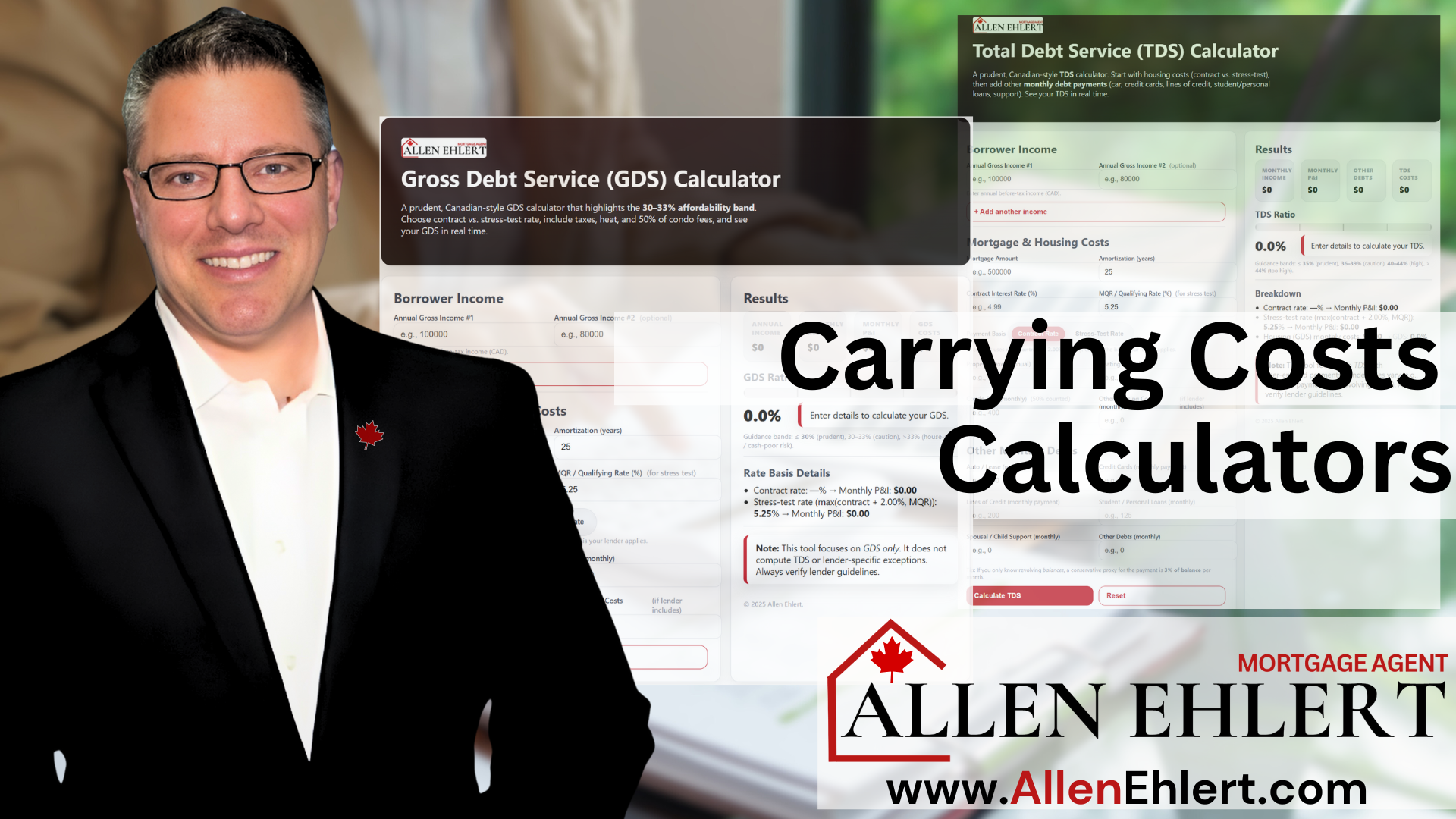
One calculator focuses purely on your housing costs—this is known as your Gross Debt Service ratio (GDS). It looks only at the property itself: mortgage payments, property taxes, heating, and any condo fees. In other words, it measures the true carrying cost of the home alone.
The other calculator goes a step further. It considers your Total Debt Service ratio (TDS), which adds in all of your other financial obligations—credit cards, car payments, student loans, and any other monthly debt commitments. This version gives you a full, realistic picture of how your potential home fits into your overall financial life because owning a home doesn’t occur in a financial vacuum, your ability to carry it depends on how many ‘other things’ you are carrying as well.
Having both calculators matters because it’s one thing to afford a home on paper—and another to afford it comfortably in real life.
When These Calculators Are Critical
These calculators are critical for financial planning at every stage of real estate—from your first purchase to refinancing, renewal, or investment. Each situation brings its own financial challenges and opportunities, and knowing your true carrying costs keeps you grounded in reality, not just numbers on a page.
When You’re Purchasing a Home:
Before making an offer or even applying for pre-approval, the calculator gives you a clear picture of what you can truly afford month to month. By calculating your Gross Debt Service (GDS) and Total Debt Service (TDS) ratios, you can see how a specific home fits within your income and lifestyle—before you fall in love with something that stretches your budget.
When You’re Refinancing:
Refinancing often means tapping into your home’s equity—whether to consolidate debt, renovate, or invest elsewhere. Using the calculator before refinancing helps you project how new loan terms, interest rates, or added debt will affect your monthly carrying costs. It’s a reality check that ensures the new mortgage still fits comfortably within your means.
When You’re Renewing Your Mortgage:
Many homeowners simply sign renewal offers without comparing rates or recalculating affordability. But small changes in interest rates can impact monthly payments significantly. Running your numbers through the calculator before renewal helps you compare lender offers, renegotiate smarter, and confirm that your updated payment structure still aligns with your long-term financial goals.
When You’re Investing in Real Estate:
For investors, the carrying cost calculator becomes a forecasting tool. It helps determine if a property will generate positive cash flow or drain your resources. By comparing rental income against total carrying costs—mortgage, taxes, insurance, maintenance, and management—you’ll quickly see whether the property adds to your wealth or just adds stress.
In short, these calculators aren’t just for qualifying—they’re for planning, comparing, and protecting your financial stability at every turn in your real estate journey.
The Difference Between the Two Calculators
The two Carrying Cost Calculators may look similar at first glance, but they serve distinct financial purposes—each offering a different lens on affordability.
The first calculator focuses solely on your Gross Debt Service (GDS) ratio. This version calculates your pure carrying cost—the core expenses tied directly to the property itself. It includes your mortgage payment, property taxes, heating costs, and any applicable condo fees. In other words, it shows what it costs just to own and maintain the home, without considering any outside debts or obligations.
The second calculator builds on that foundation by factoring in your Total Debt Service (TDS) ratio. This takes the analysis further, adding your other financial commitments—things like credit cards, car loans, personal lines of credit, or student loans. It paints a more complete picture of how your housing costs fit into your entire financial life.
In short, the GDS calculator answers the question:
“Can I afford to carry this home on its own?”
While the TDS calculator answers:
“Can I afford this home and everything else I already owe?”
Both perspectives are vital. Together, they help you balance your dream home with financial peace of mind—so you’re not just qualifying for a mortgage, but thriving with it.
.
How to Use the Calculators (Step-by-Step)
Using the Carrying Cost Calculators is straightforward—but the insights they provide are powerful. Each tool serves a different purpose depending on what kind of financial picture you’re trying to paint.
To use the GDS (Gross Debt Service) Calculator:
This calculator focuses purely on your housing-related costs—the financial heartbeat of the property itself. Here’s how to use it effectively:
- Enter your mortgage amount, interest rate, and amortization period.
- Add your annual property taxes, monthly heating costs, and condo fees (if applicable).
- Input your gross household income—that’s your income before taxes and deductions.
- The calculator will show your GDS ratio, illustrating what percentage of your income is being consumed by housing alone.
This is your pure carrying cost—ideal for seeing whether a property fits within comfortable lender guidelines (typically under 39%).

To use the TDS (Total Debt Service) Calculator:
This version builds on the first by layering in your other financial obligations. It reveals how your entire financial life interacts with your housing costs.
- Start with the same mortgage, property tax, heat, and condo fee inputs as before.
- Add in your monthly debt payments—credit cards, car loans, student loans, personal lines of credit, etc.
- Include your gross monthly income again for context.
- The calculator will produce your TDS ratio, showing how much of your income goes toward all debt combined—housing and everything else.
Lenders generally look for a TDS ratio under 44%. But more importantly, this figure tells you whether your budget has breathing room or is stretched too thin.

In short:
- The GDS calculator answers “Can I afford this property on its own?”
- The TDS calculator answers “Can I afford this property alongside my other commitments?”
Together, they help you make decisions based not just on qualification, but on comfort, sustainability, and long-term financial health.
Real-Life Example: The House That Stretched Too Far
Let me tell you a story.
A young couple—let’s call them Sarah and Mark—fell in love with a beautiful home in Whitby. They could “technically” qualify for the mortgage, but they hadn’t considered property taxes, heating, and a modest $180 monthly HOA fee. When we ran the numbers together using the calculator, they discovered their carrying cost would eat up nearly 47% of their income.
That small reality check changed everything. Instead of overextending, they found a similar home with lower taxes and heating costs—and six months later, they’re comfortably making payments, saving for vacations, and even building an emergency fund.
That’s the power of understanding carrying costs—it saves people from becoming “house poor.”
How Realtors and Clients Can Use These Tools
These calculators aren’t just for number crunching—they’re practical decision-making tools that help both clients and realtors stay grounded and confident through every stage of a real estate transaction.
For Realtors:
Realtors can use these calculators to elevate their client consultations and build instant trust. By running both the GDS and TDS calculations during an appointment or open house discussion, you can demonstrate not just what a client qualifies for, but what they can comfortably carry. This kind of insight turns you from a salesperson into a true advisor.
Imagine sitting with a buyer who’s eager to stretch for their “dream home.” Running the GDS calculator shows them the property’s true monthly cost. Then, when you include their car payment and credit card debt in the TDS calculator, the picture changes—it helps them see where comfort ends and stress begins. You’ve just protected them from becoming house poor, while earning their long-term trust.
Realtors can also use these tools during listing appointments to illustrate affordability to potential buyers or when working with investors comparing multiple properties. Showing real numbers makes every conversation more credible, more transparent, and ultimately, more persuasive.
For Clients and Homebuyers:
For clients, these calculators provide a reality check before emotions take over. Use them to test out different purchase prices, down payments, and interest rates. A few minutes of calculation can reveal what fits comfortably in your budget—and what could cause strain once property taxes, utilities, and debts are factored in.
Homeowners can also use them before a refinance or renewal to see how new rates or loan amounts affect monthly affordability. And for investors, the calculators quickly highlight whether a property’s rental income truly covers the carrying cost or if it’ll require out-of-pocket support each month.
In short, these tools take the guesswork out of homeownership. They allow realtors to guide smarter conversations and help clients make informed, confident choices rooted in real numbers—not wishful thinking.
Allen’s Final Thoughts
When it comes to mortgages, knowledge isn’t just power—it’s peace of mind. My Carrying Cost Calculators are designed to take the mystery out of affordability and put control back in your hands. Whether you’re a first-time buyer or a seasoned investor, these tools make your decision-making smarter, clearer, and less stressful.
If you’re unsure about your numbers—or want a second opinion—I’m here to help. As a licensed mortgage agent, I’ll walk you through your calculations, explain what lenders are really looking for, and explore every available option to make your homeownership dreams more affordable.
Reach out anytime, and let’s make sure your home fits both your heart and your budget.