“Think you’re ready to buy your dream home? Well, hold on a minute! There’s a document that could make—or completely break—your deal: the mortgage commitment letter. If you don’t know what it is or why it’s so important, stick around, because I’m about to explain exactly what you need to know to protect yourself and avoid a financial nightmare!”
What is a Mortgage Commitment?
Importance of a Mortgage Commitment
Submitting a Mortgage Application
Waiving Condition of Financing
Risk of Waiving Condition of Financing
What is a Mortgage Commitment?
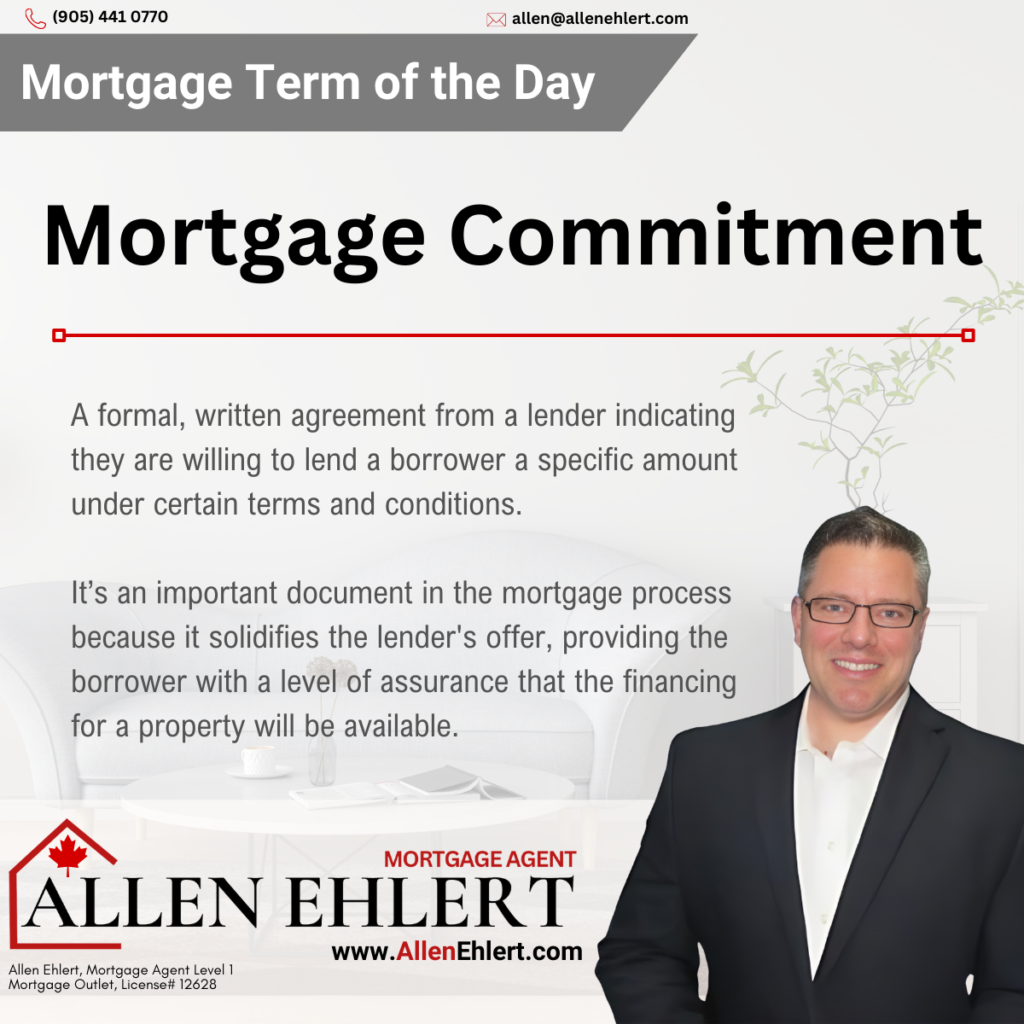
A mortgage commitment is a formal, written agreement from a lender indicating they are willing to lend a borrower a specific amount under certain terms and conditions. It’s an important document in the mortgage process because it solidifies the lender’s offer, providing the borrower with a level of assurance that the financing for a property will be available.
A mortgage commitment is really a ‘conditional’ commitment insofar as the commitment by the lender is only made once all conditions are satisfied.
Often clients get pre-approved, but a pre-approval is provided through a letter from the lender saying they will probably give you a mortgage. However, a mortgage commitment is a stronger document. It says the lender is good to lend on this property if all the conditions described in the mortgage commitment are met. To meet these conditions, additional documentation (such as an appraisal and Agreement of Purchase and sale) is required.
Importance of a Mortgage Commitment
A mortgage commitment is crucial in real estate transactions as it offers the borrower more security that they will be approved for financing, helping them move forward with more confidence in making an offer or closing a purchase. Once all conditions are met as described in the mortgage commitment and the meeting of those conditions are signed off by the lender, the commitment typically transitions to ‘clear and close’ status and a final mortgage agreement and funding at closing.
In the mortgage commitment process, the Mortgage Agent’s role is to ensure that the lender’s offer meets the client’s needs, guide the client through all conditions, and prepare the deal for final approval and closing.
Read More: Canada’s Mortgage Process
Here’s a step-by-step breakdown of my role during the mortgage commitment process:
Getting a Mortgage Commitment
Often, getting a mortgage commitment from a lender follows the process of obtaining a mortgage pre-approval. A mortgage approval is a cursory review of your financials with a response by a letter of approval stating that under certain conditions the lender will probably give you a mortgage. However, this isn’t always the case as it is mostly banks and credit unions who offer mortgage pre-approvals.
A stronger document is a mortgage commitment letter. If you didn’t get a bank pre-approval first (which is optional), the same early steps occur to enable me to properly and legally serve you. If you did, move to here:
1. Initial Client Consultation
- Understand Client Goals: The Mortgage Agent begins by discussing the client’s goals, such as the desired property type, location, and budget, to align on what’s affordable and realistic. In the business, we call this the ‘discovery call’. During the discovery call a Mortgage Agent ‘triages’ the client to understand if the Mortgage Agent is the best professional to assist the client.
- Explain the Process: The Mortgage Agent walks the client through the mortgage process, explaining the steps and timelines involved in pre-approval and how it leads to full approval.
2. Identification
- Collect Client Identification: It is a legal requirement to collect client identification information so the Mortgage Agent can prove to the regulator (FSRA) during an audit that the client is who they say they are.This is to comply with AML legislation, and to protect all parties involved in the transaction.
- Identify Politically Exposed People: The vast majority of Canadians are not politically exposed people.
A Politically Exposed Person (PEP) and a Domestically Politically Exposed Person (DPEP) are individuals in high-profile or influential positions, making them potentially vulnerable to involvement in or exposure to illicit financial activities, such as money laundering or corruption. Canadian laws require Mortgage Agents to identify PEP and DPEP people early in the mortgage process.
3. Document Collection Process
Like a surgeon who gathers as much information as possible (patient examination, blood tests, MRI, x-rays, etc.) before cutting into a patient, a Mortgage Agent needs to collect as much information as possible about the client to provide the best care and ensure the optimum outcome. The process of collecting this information is the Document Collection Process.
During this process, as your Mortgage Agent, I:
- Review the document collection process.
- Explains to the client the importance of documents today and why they are required.
- Encourages clients to start collecting and building their document application package.
- Instruct clients on how to put documents into electronic form and submit them securely.
4. Application Underwriting
- Income Verification: The Mortgage Agent collects preliminary income information, including pay stubs, employment letters, and tax documents (like T4s or NOAs) to assess income stability if the applicant is an employee. If the applicant is self-employed, I collect information about your business, and we discuss the various mortgage programs applicable to business owners to see what is the best fit for you.
- Down Payment Verification: The Mortgage Agent reviews the client’s savings or other sources of funds intended for the down payment and closing costs, ensuring they meet lender criteria.
- Credit Review: With the client’s permission, the Mortgage Agent pulls a credit report to check credit scores, existing debts, and payment history, which impacts mortgage qualification.
For more information see:
5. Preliminary Assessment of Borrowing Capacity
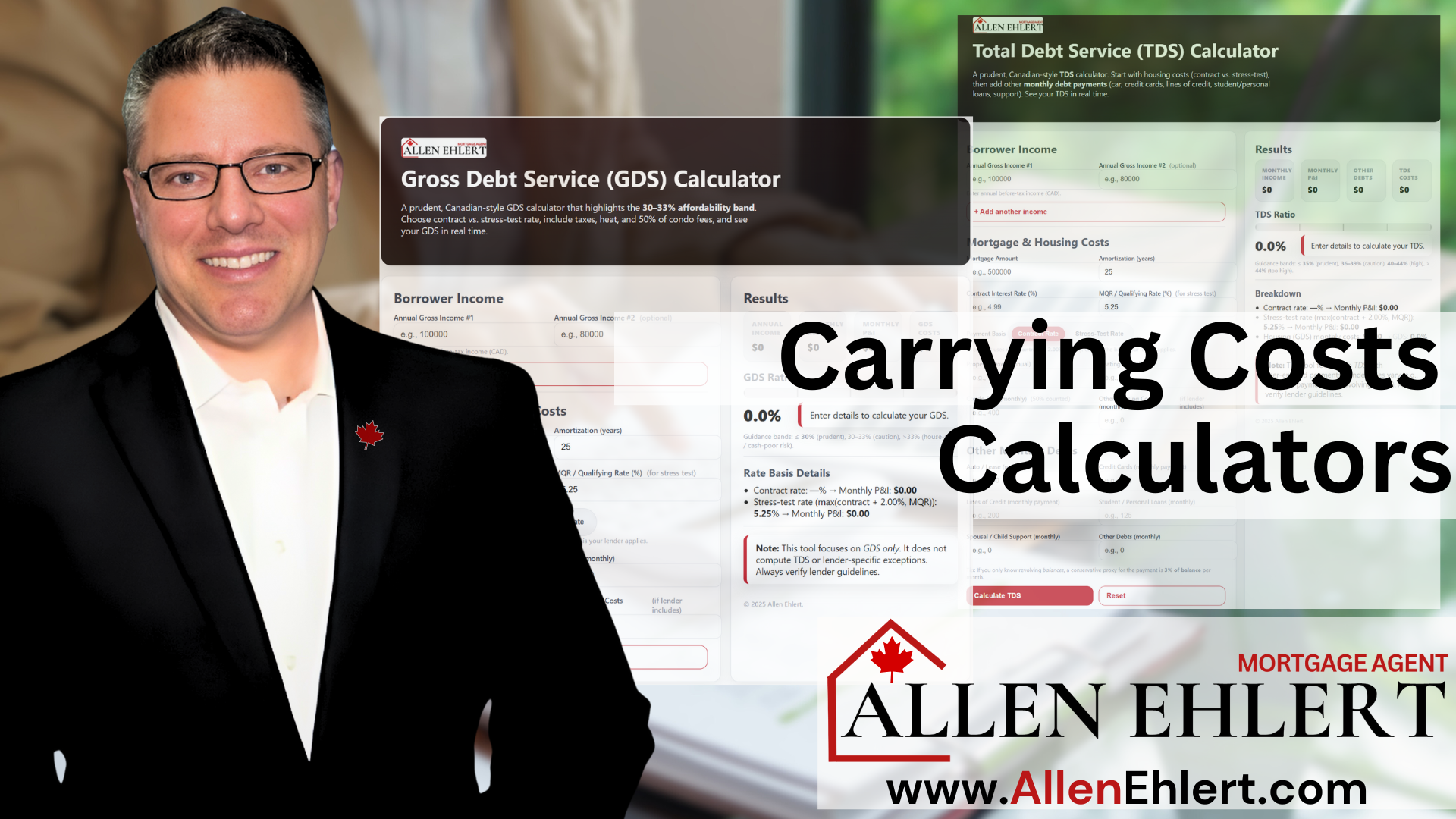
- Calculate Debt Service Ratios: The Mortgage Agent calculates the Gross Debt Service (GDS) and Total Debt Service (TDS) ratios, which help determine how much mortgage the client can afford based on income and debts.
For more information see: Calculating Debt Service Ratios - Estimate Mortgage Amount: Based on the initial financial review, the Mortgage Agent provides an estimate of the mortgage amount for which the client may qualify, along with estimated interest rates and terms.
6. Develop a Mortgage Strategy
- Develop Mortgage Strategy: Once the documents have been collected and I have completed a financial analysis, we are now in a position to discuss your options. Combined with your vision, lifestyle, goals, income situation, and risk tolerance, we can broadly discuss approaches that align with your goals and how to achieve them.
For more information see: - Develop Mortgage Plan: Based on the developed mortgage strategy, I can now develop the Mortgage Agent plan which describes how best to achieve your goals. It includes what you want to achieve, your risk tolerance, your timeframe to become mortgage-free, how your mortgage strategy and plan fits in with your broader financial plan as well as the approach to monitor your progress, take advantage of opportunities, and keep you on track.
If you To get a mortgage commitment in Canada, follow these steps to ensure you meet lender requirements and are well-prepared for the process:
7. Submit a Mortgage Application
Once you’ve found a property or if you’re ready to move forward, I will submit a formal mortgage application to your chosen lender.
It’s important to remember that if you didn’t get a pre-approval, and you are applying for a mortgage ‘subject to a specific property’, you need to account for the completion of the mortgage approval process while making the offer to allow sufficient time for the lender to review your mortgage application. This is generally 5 to 7 business days but could be longer for self-employed borrowers, those with non-conventional employment like contract workers, those buying unique or rural properties, and those applying for high ratio mortgages.
What usually causes a problem, are borrowers who don’t have all their documentation ready. The application can’t go forward if there are documents critical to the application that the borrower can’t provide. You need to work with me to ensure everything is in place before you make an offer with your realtor. This is why I put such an emphasis on working with you to get all your documents together even before you start looking, so when you do find what you are looking for, you are ready to move forward.
The application will include details on the property, the requested loan amount, your mortgage structure, and your financial information.
If your mortgage application is not accepted, I will review the lender’s response, and suggest re-submitting to the lender under a different mortgage program or submitting your application to another lender.
8. Underwriting Review and Conditional Approval
The lender’s underwriter reviews all provided documentation to confirm your financial status, employment, creditworthiness, and the property’s value. Often the lender will order an appraisal of the property by a qualified real estate appraiser to ensure the appraised value is on track with the mortgage amount; it is the lender’s collateral afterall.
They will issue a conditional approval if everything aligns with their requirements, but you may still need to meet specific conditions, such as additional income verification or mortgage default insurance approval (if the down payment is under 20%).
10. Receive the Mortgage Commitment
Once all conditions are met and the lender likes the file, the lender will issue a mortgage commitment letter.
Key Elements of a Mortgage Commitment:
- Loan Amount: Specifies the maximum amount the lender is willing to lend based on the borrower’s financial profile and the property’s appraised value.
- Interest Rate and Term: Outlines the interest rate, which may be fixed or variable, and the loan term (e.g., 1-year, 5-year term), including any rate lock details.
- Payment Details: Details the payment frequency and the expected amount of each payment, which can be based on monthly, bi-weekly, or other payment schedules.
- Conditions: Lists any conditions that the borrower must satisfy for the loan to be finalized, such as confirming employment, providing additional documentation, or obtaining mortgage default insurance if required (e.g., with high-ratio mortgages in Canada).
- Expiration Date: A mortgage commitment typically has an expiration date, after which the terms are no longer guaranteed if the mortgage isn’t closed.
- Other Terms and Covenants: These may include other conditions or restrictions regarding the property or the borrower’s obligations, such as maintaining insurance on the property.
10. Waiving Condition of Financing
When you make an offer to purchase a house, the most common conditions put into most offers are condition of financing and condition of home inspection. Most borrowers usually waive the condition of financing after receiving a signed mortgage commitment from the lender, but only if the conditions in the commitment are minimal, manageable, or already satisfied. However, it’s important to evaluate the specifics of the mortgage commitment before waiving the financing condition, as there may still be risks.
You need to understand the mortgage commitment, if your agent or bank salesperson doesn’t go over your mortgage commitment with you, RUN. You can’t assess your risk of whether you can waive the condition of financing if your agent or bank person doesn’t review your mortgage commitment with you. You should NOT waive the condition of financing unless you are confident you can meet all conditions in the commitment, and you can’t do that if you don’t know what those conditions are, because you must know if you can meet those conditions without issue, and if you are not sure, now is the time to address this.
Risk of Waiving Condition of Financing
You also need to know that even with a mortgage commitment in hand, a list of certain risks remains. I’ll discuss that in another video or contact me for details. Sometimes realtors because of market conditions get a little aggressive because they want that condition waived.
Here’s an example, a couple made an offer to buy a home in the GTA. Their realtor advised them to waive condition of financing to make their offer more attractive. They signed a mortgage commitment contingent on an appraisal. When the appraisal came in $100,000 lower than the purchase price, their lender reduced the mortgage amount, forcing them to scramble to come up with the extra funds, or worse if they can’t come up with the money.
What you need to understand is that while a signed mortgage commitment is a strong indicator that financing will go through, it’s not a guarantee, deals blow up all the time, which is why you need to be informed and proceed cautiously.
Summary
The mortgage commitment process is a critical phase where the Mortgage Agent’s expertise in managing conditions, coordinating parties, and verifying details ensures the client successfully moves from commitment to final approval and funding. This hands-on guidance helps avoid delays and provides clients with confidence as they approach closing day.