A debt settlement is not the same as a consumer proposal, although they share similarities. Both methods involve negotiating a reduction in debt with creditors, but they differ significantly in structure, legal protections, and outcomes. Here is a clear, professional explanation of how they differ.
When is Debt Settlement Effective?
When Debt Settlement Might Not Be Effective
What is a Debt Settlement?
Debt settlement is an informal negotiation process, typically managed privately between a debtor (or a hired debt settlement company) and their creditors. The goal is to convince creditors to accept a lump-sum payment that is less than the total amount owed, effectively reducing the overall debt burden.
Key characteristics of debt settlement include:
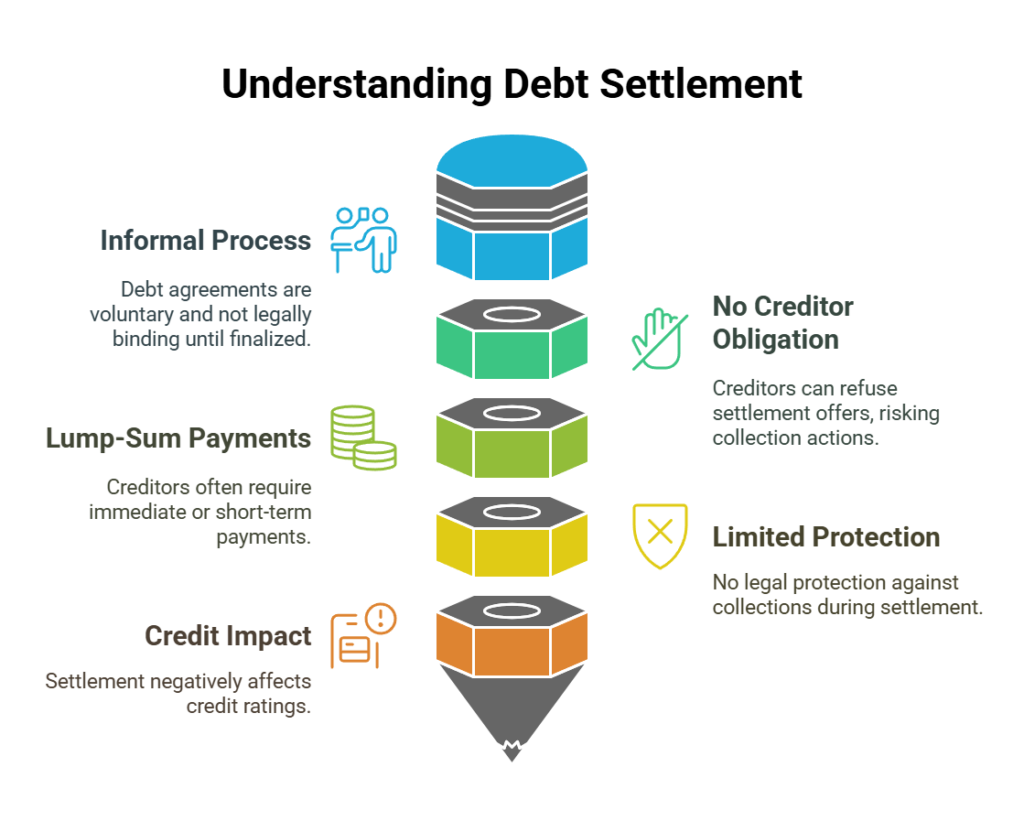
- Informal Process: Debt settlement agreements are voluntary and not legally binding until finalized.
- No Creditor Obligation: Creditors are not obligated to accept a settlement offer and may refuse to negotiate, leaving the debtor exposed to collection actions.
- Lump-Sum Payments: Creditors often require immediate or short-term lump-sum payments, making it difficult for debtors with limited cash reserves.
- Limited Protection: Unlike consumer proposals, debt settlement provides no immediate legal protection against collection calls, wage garnishments, or legal actions.
- Credit Impact: Debt settlement negatively affects credit ratings, particularly because debts often become delinquent during negotiation periods.
Consumer Proposal
A consumer proposal, in contrast, is a formal, legally binding process administered by a Licensed Insolvency Trustee (LIT) under the Bankruptcy and Insolvency Act. This method provides immediate legal protections and predictable outcomes, offering significant advantages over debt settlement for individuals facing serious financial hardship.
Key characteristics of a consumer proposal include:
- Legally Binding Agreement: Once creditors accept the proposal, all involved creditors must comply, providing certainty and stability.
- Protection from Creditors: Filing a consumer proposal immediately halts creditor actions, including collections, garnishments, lawsuits, and harassing calls.
- Structured Payments: Repayments occur monthly, often spread over up to five years, making them more affordable and manageable than lump-sum settlements.
- Creditor Acceptance: Requires approval from creditors holding more than 50% of the total debt value included, binding all creditors upon approval.
- Reduced Debt: Typically reduces the total debt significantly, with most debtors paying only a portion of what they originally owed.
- Impact on Credit: A consumer proposal remains on a credit report for three years after completion but provides a clear, structured path toward rebuilding credit afterwards.

When is Debt Settlement Effective?
Debt settlement can be an effective strategy under specific financial circumstances. It’s typically suitable when you have substantial unsecured debts and available resources to negotiate lump-sum payments. Debt settlement is most effective when you can immediately access funds—such as savings, gifts, inheritances, or sale proceeds—to offer creditors a reduced, lump-sum settlement payment.
Debt settlement is best for unsecured debts, including:
- Credit cards
- Unsecured personal loans
- Payday loans
- Lines of credit
Secured debts like mortgages or car loans are typically not eligible.
Creditors are more willing to settle if they believe you cannot reasonably repay your debts in full. Demonstrating financial hardship can encourage creditors to accept reduced settlement offers, usually after debts are overdue or transferred to collection agencies.
When Debt Settlement Might Not Be Effective
- If you can’t secure lump-sum funding.
- If your debts are manageable through budgeting, debt consolidation, or structured payment plans.
- If you seek immediate legal protection from creditors (as debt settlement offers none).
- If preserving your credit score is a top priority.
In such cases, a consumer proposal may be your best option before seeking bankruptcy in more extreme situations.
Summary
Although debt settlement and consumer proposals both offer debt relief through reduced repayment, they differ substantially. Debt settlement is an informal, riskier process with limited protections and higher uncertainty, while a consumer proposal is a structured, legally protected solution offering predictable payments and strong creditor protection. For Canadians facing severe debt problems, a consumer proposal is typically the safer and more effective choice.