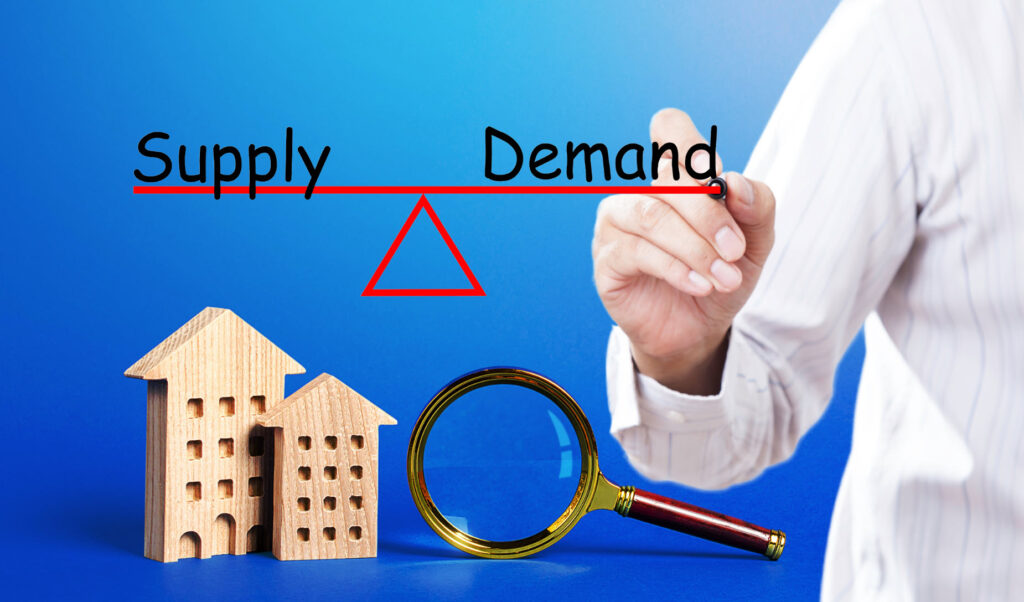
The principles of supply and demand are fundamental in determining real estate prices. The balance between the number of buyers in the market (demand) and the availability of properties (supply) governs the real estate market, just like any other market. When demand exceeds supply, typically due to factors such as economic growth, low interest rates, and population increases, it leads to a competitive market environment, thereby driving up property prices. This scenario is often characterized by bidding wars and rapid sales.
Conversely, when supply outstrips demand, possibly due to economic downturns, high interest rates, or an oversupply of housing, prices tend to stabilize or decrease as sellers compete to attract a smaller pool of buyers. This dynamic interplay between supply and demand is a critical determinant of real estate market trends and pricing patterns. Additionally, several external factors, such as governmental regulations, demographic changes, and general economic conditions, can affect it and change the supply and demand equation, which in turn affects property values.
Limited Supply in High-Demand Areas
Economic Growth and Employment
Changing Demographics and Preferences
Limited Supply in High-Demand Areas
In many desirable locations, there is a finite amount of land and housing available. When more people want to live in these areas than there are homes available, it creates a seller’s market. This scarcity drives up prices as buyers compete for a limited number of properties.
Population Growth
Areas experiencing population growth, whether due to natural increase or migration, often see increased demand for housing. If the supply of new housing doesn’t keep pace with this growth, it can lead to higher prices.
Economic Growth and Employment
Regions with strong economic growth and job opportunities attract more people seeking employment. This influx increases the demand for housing, and if the housing supply is not sufficient to meet this demand, prices will rise.
Investor Activity
In markets where investors are actively buying properties, either for rental or speculative purposes, the demand increases. This can lead to a reduction in the supply of homes available for owner-occupiers, pushing up prices.
Development Restrictions
In areas with strict zoning laws, building codes, or geographical constraints (like mountains or protected lands), the ability to create new housing is limited. This restriction in supply can lead to higher prices, especially if the demand is high.
Changing Demographics and Preferences
Shifts in demographics (like an aging population) or preferences (such as a trend towards urban living) can change where and how people want to live, affecting demand in various areas. If the supply doesn’t align with these changes, it can impact prices.
Interest Rates and Financing Availability
Lower interest rates and greater availability of financing can increase the number of potential buyers in the market, boosting demand. Conversely, higher interest rates or tighter lending standards can reduce demand.
Economic and Political Stability
Areas perceived as economically or politically stable often attract more buyers, including foreign investors, increasing demand. In contrast, instability can reduce demand.
Speculative Demand
Sometimes, demand is driven not just by people wanting to live in an area but also by speculation about future price increases. This speculative demand can inflate prices, especially if the supply is constrained.
Market Sentiments
Consumer expectations and confidence also have an impact on the real estate market. If people expect prices to rise, they might rush to buy, increasing demand and pushing up prices.
In essence, real estate prices are a reflection of the balance (or imbalance) between supply and demand. When demand exceeds supply, prices tend to rise. Conversely, if there is an oversupply of housing with insufficient demand, prices may fall. This dynamic is fundamental to understanding real estate market trends and pricing.