Did you know that the risk-free rate can change a lot? It can has been as low as 0.52% in recent times to as high as 15.84% back in the early 1980s. The risk-free rate concept is key in finance. It affects how we price different financial things, like bonds and options, and helps set the cost of money for businesses. It’s important to understand the risk-free rate to make smart choices when you invest and to know the true value of assets.
The risk-free rate is the minimum return an investor expects from a totally risk-free investment. We don’t really have investments with zero risk, but the interest rate on three-month Treasury bills (T-bills) is often used as the risk-free rate. For Canadian investors, these T-bills are a key marker for making financial models, investments, and valuing assets, comparing other investment returns against it.
In this piece, we’ll explore the risk-free rate in depth. We’ll look at what it is, why it matters, and what affects it. You will learn about its stand-ins (like T-bills) and how it shapes the prices of financial stuff and the cost of money for businesses. By the end, you’ll know this finance fundamental inside and out.
The risk-free rate (base rate) is the yield on a risk-free security, typically government bonds (e.g., Treasury bonds), which are considered free of default risk. It serves as the foundation for all other bond yields.
In Canada, the risk-free rate or base rate of a bond yield is typically based on the yield of Government of Canada bonds, specifically those with different maturities. The most commonly referenced government bonds for determining the risk-free rate are:
- Government of Canada Treasury Bills (T-Bills)
These are short-term securities with maturities of less than one year. The yield on T-Bills is often used as the risk-free rate for short-term investment horizons. - Government of Canada Bonds
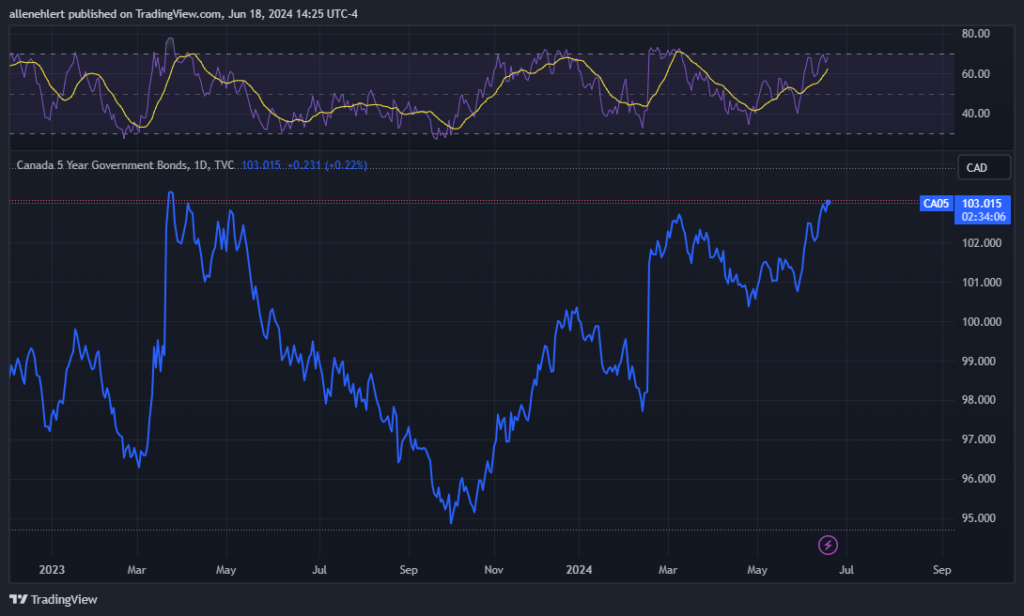
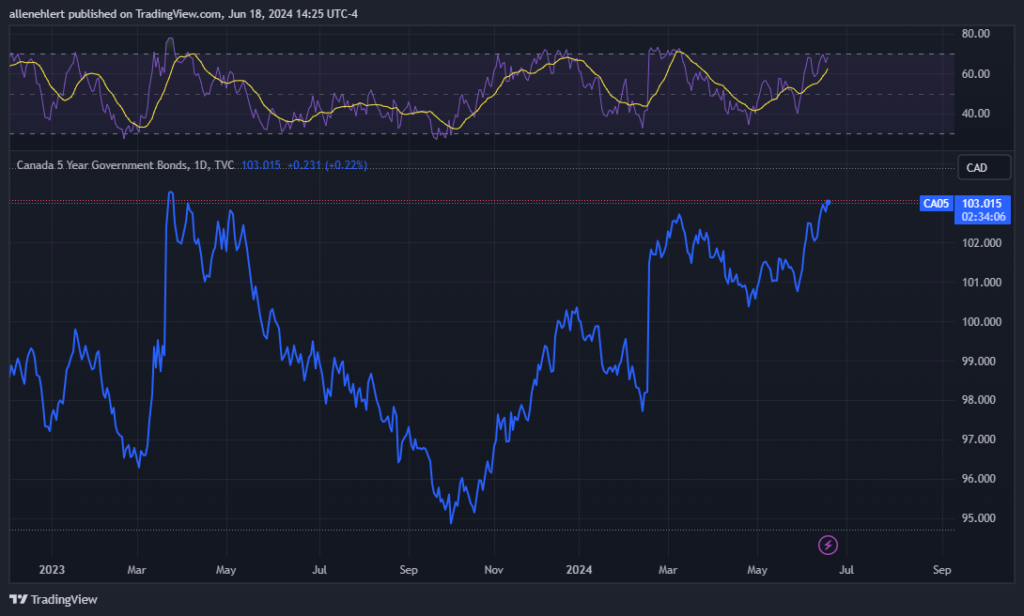
These are medium- to long-term securities with maturities ranging from one year to 30 years. The yield on these bonds, particularly the 5-year and 10-year Government of Canada bonds, is frequently used as the risk-free rate for medium- to long-term investment horizons.
The yields on these government securities are considered risk-free because the Canadian government is highly unlikely to default on its debt, making these bonds a benchmark for the lowest possible risk. Investors and financial analysts use these yields as a baseline to evaluate the required returns on other investments, adding various risk premiums to this base rate to account for different types of risks associated with non-government securities.
Key Takeaways
- The risk-free rate is the minimum return investors want from a zero-risk investment.
- T-bills’ interest rate is a top pick for the risk-free rate among Canadian investors.
- The risk-free rate is central in finance, used to measure all other investment returns.
- It’s vital in financial models, deciding on investments, and valuing assets, affecting the price of financial products.
- Things like the state’s monetary moves, economy, future inflation, and feelings in the market can change the risk-free rate.
Understanding the Risk-Free Rate
The risk-free rate of return is a no-risk rate for investments. It’s calculated by taking away the inflation rate from a Treasury bond’s yield that matches how long you’ll invest. The risk-free rate sets the minimum return a person investing expects. They won’t take on more risk unless there’s a chance to earn over the risk-free rate.
What Is the Risk-Free Rate of Return?
A true risk-free rate isn’t real, but people use the three-month U.S. Treasury bill interest rate as close to it. This is because the U.S. government is seen as very unlikely to not pay its debts. The risk-free rate is crucial in finance. It stands as a benchmark for safe investments. This shows how good or bad other investments are and guides financial decisions.
The Risk-Free Rate Represents the Theoretical Minimum Return
The risk-free rate is the base minimum return requirement for any investment. An investor will only take more risk if they could make more than this guaranteed amount. This idea is vital in finance theories and models. The capital asset pricing model (CAPM) uses this.
Importance of the Risk-Free Rate
The risk-free rate is at the core of financial understanding. It acts as a none-risk benchmark for comparing other investment returns. Changes in the risk-free rate have big effects. They can adjust how much return we should expect from risky investments. This also influences how financial products are priced.
Read More:
Bond Call (Prepayment) Premium
Proxies for The Risk-Free Rate (Base Rate)
When the real risk-free rate isn’t easy to find, experts often use different things to stand in. These stand-ins carry very low risk, even though they might not be truly without risk.
Government Treasury Securities
Government treasury securities, like Treasury bills and long-term bonds, top the list for mimicking a risk-free rate. They are seen by the market as almost risk-free due to extremely rare default cases.
SOFR and Other Reference Rates
The Secured Overnight Financing Rate (SOFR) and similar rates are also used. SOFR, for instance, reflects the cost of overnight loans backed by U.S. Treasury bonds. It is a key measure for short-term rates.
Central Bank Policy Rates
Then, there are central banks’ policy rates, such as the U.S. federal funds rate or the Bank of Canada’s key rate. These rates often form the basis for other short-term rates.
Inflation-Indexed Bonds
Inflation-indexed bonds, like U.S. TIPS, are good if you’re worried about your money losing value because of rising prices. They change their payments to keep up with inflation.
Cash or Cash Equivalents
For really short-term investments, using cash or similar things like money market funds is common. These are almost as safe as it gets but mainly for the short term.
| Proxy for Risk-Free Rate | Description | Advantages | Limitations |
|---|---|---|---|
| Government Treasury Securities | Government-issued debt instruments, such as T-bills and longer-term treasury bonds | Considered the closest approximation to risk-free assets in many countries | May not be entirely risk-free, as even government securities carry some small amount of risk |
| SOFR and Other Reference Rates | Secured Overnight Financing Rate (SOFR) and other short-term reference rates | Provide a broad measure of the cost of borrowing cash overnight, collateralized by U.S. Treasury securities | May not fully capture the true risk-free rate, as they can be influenced by factors beyond just the risk-free rate |
| Central Bank Policy Rates | Benchmark interest rates set by central banks, such as the federal funds rate or the Bank of Canada’s key rate | Closely tied to the broader financial system and monetary policy decisions | May not fully reflect the risk-free rate, as central bank policy rates can be influenced by other economic factors |
| Inflation-Indexed Bonds | Bonds that adjust their principal and coupon payments based on changes in inflation, such as TIPS | Provide a proxy for the real risk-free rate, helping investors hedge against inflation | May not fully capture the nominal risk-free rate, as they are focused on the real, inflation-adjusted return |
| Cash or Cash Equivalents | Money market funds, high-quality short-term fixed-income instruments, and other highly liquid, low-risk assets | Suitable for short-term investment horizons, with minimal credit risk | May not accurately represent the true risk-free rate, especially for longer-term investments |
Risk-Free Rate and Financial Asset Pricing
The risk-free rate is key in how financial assets are valued. It is the base return rate used to compare against risky assets. The risk-free rate directly influences what return is expected from risky assets.
Role in Valuation Models
In the finance world, the risk-free rate is vital. It acts as a starting point to measure other investments. The rate influences how risky assets are valued. So, changes in it can have big impacts.
Impact on Bond Pricing
Bond prices and the risk-free rate are closely linked. Bonds’ values change as this rate does. When the rate goes up, bond prices go down.
But, if the rate falls, bond prices rise.
Influence on Option Pricing
Options’ values are affected by the risk-free rate. The Black-Scholes model is used to figure this out. When the risk-free rate changes, the option’s price changes too.

Factors Influencing the Risk-Free Rate
The risk-free rate impacts many financial decisions. It’s shaped by monetary policy, economic conditions, and inflation expectations. Also, it’s influenced by the supply and demand for government securities, market sentiment, and risk appetite.
Monetary Policy
Central banks set the risk-free rate through monetary policy. Changes in their target interest rates affect it directly. Policy rate changes alter government security yields, which represent the risk-free rate.
Economic Conditions
Factors like growth, inflation, and employment affect the risk-free rate. Positive economic changes usually mean higher risk-free rates. Investors need more return to cover rising risks.
Inflation Expectations
If people expect inflation to rise, the risk-free rate goes up. Investors want a larger risk-free rate to keep their money’s buying power.
Supply and Demand for Government Securities
The number of government securities available and the number needed also matter. This includes things like how much debt the government has and its fiscal policies. It all influences the risk-free rate through their impact on security yields.
Market Sentiment and Risk Appetite
Investor feelings and risk preferences can shift the risk-free rate. In uncertain times, they might put more money into government securities. This demand can lower their yields and the risk-free rate.
Knowledge of these factors helps investors and financial experts understand pricing and investment choices better.

Conclusion
The risk-free rate is key in finance, crucial for models, investing, and valuing assets. It’s based on rates for short-term government bonds, often U.S. Treasury bills. This summary of risk-free rate helps set a standard against which to judge other investments.
Understanding the risk-free rate and how it’s set lets investors and analysts compare different investments. You’ll grasp the risks and rewards in the financial world better. This helps make smarter choices and reach your financial aims.
The importance of understanding risk-free rate cannot be overstated. It influences asset prices and helps us decide if an investment is good. Mastering these ideas boosts your financial choices and standing in the market.
FAQ
What is the risk-free rate of return?
The risk-free rate of return is a hypothetical rate. It represents the interest rate on a totally risk-free investment over time.
What is considered the risk-free rate?
No investment is completely risk-free. However, the interest rate on a three-month U.S. Treasury bill (T-bill) is seen as almost risk-free. This is because there’s very little chance of the U.S. government not paying its debt.
Why is the risk-free rate important?
The risk-free rate is a basic concept in finance. It sets a standard for comparing the returns of all other investments. It’s crucial in financial models, investing, and valuation.
What are some alternatives to the risk-free rate?
In financial analysis, options besides Treasury bills include long-term treasury bonds, SOFR, and reference rates. Also used are central bank policy rates, inflation-indexed bonds, and cash.
How does the risk-free rate influence financial asset pricing and valuation?
The risk-free rate is vital for pricing and valuing financial assets. It’s used as a basis for comparing investment returns. Plus, it changes the required rate of return on risky investments.
What factors influence the risk-free rate?
Many things affect the risk-free rate. This includes the government’s economic policies. Also, market conditions, expectations of inflation, and demand for government securities play a role.