When purchasing a property, the condition of home inspection gives the buyer the right to hire a professional home inspector to assess the property’s condition. If significant issues are uncovered, the buyer can renegotiate the price, request repairs, or cancel the deal depending on how the condition is stated in the Purchase and Sale Agreement.
In a Purchase and Sale Agreement, conditions related to a home inspection can vary based on the level of protection a buyer wants. These conditions give the buyer the opportunity to evaluate the condition of the property and make an informed decision before finalizing the purchase.
What is Included in a Home Inspection?
What is Not Included in a Home Inspection
Common Home Inspection Conditions
Home Inspection and Your Mortgage

What is a Home Inspection
A home inspection is a thorough visual examination of a property’s physical structure and systems, conducted by a qualified inspector. Its primary purpose is to identify existing or potential issues, ensuring that buyers are fully informed about the property’s condition before finalizing a purchase.
Cost of a Home Inspection
The cost of a home inspection in Ontario varies based on factors such as the property’s size, age, and location. On average, you can expect to pay between $300 and $600 for a standard home inspection depending on the size and location of the property. For instance, in Toronto, the average cost is approximately $492.
Investing in a professional home inspection provides valuable insights into a property’s condition, helping buyers make informed decisions and potentially saving on costly repairs in the future.
What Is Included in a Home Inspection
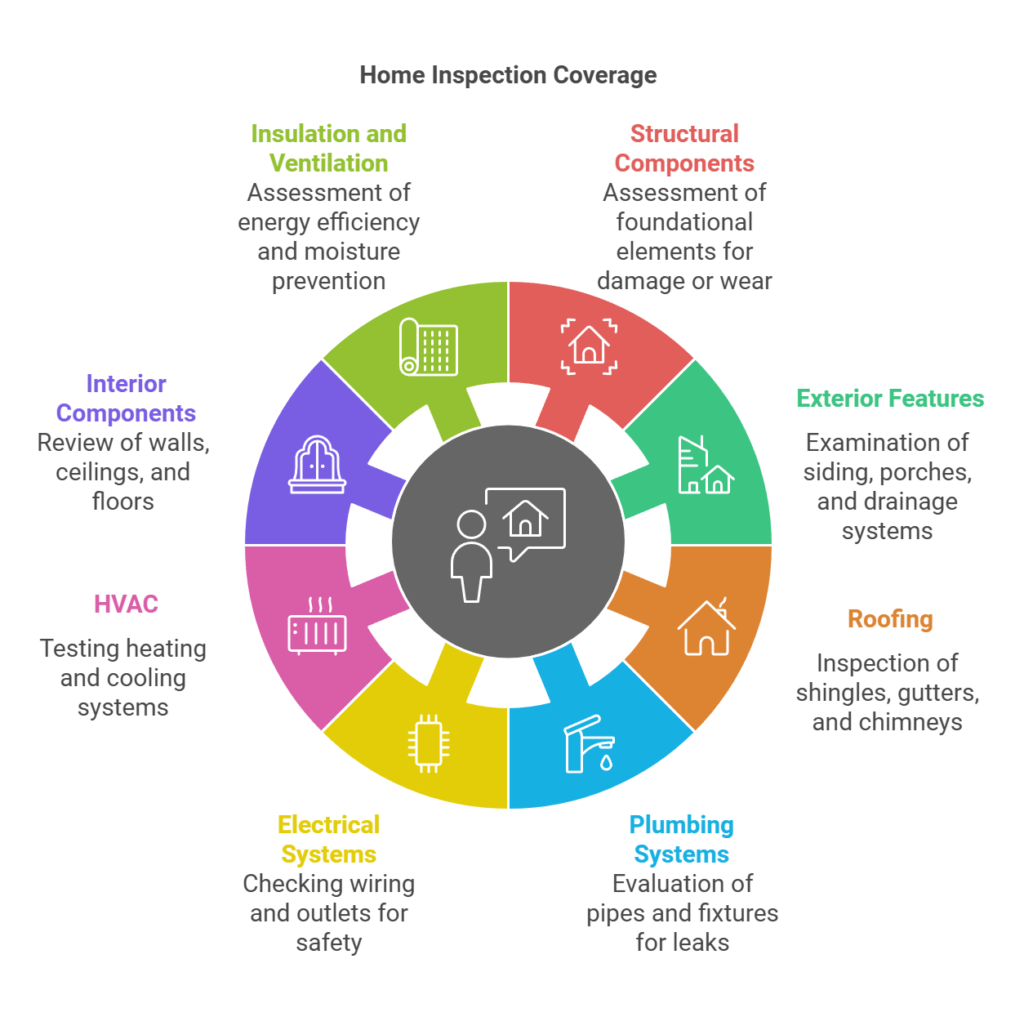
A comprehensive home inspection typically covers the following areas:
- Structural Components: Assessment of the foundation, walls, roof, attic, and other structural elements for signs of damage or wear.
- Exterior Features: Examination of siding, porches, balconies, walkways, driveways, and drainage systems.
- Roofing: Inspection of shingles, flashing, gutters, downspouts, and chimneys to evaluate their condition and identify any leaks or damage.
- Plumbing Systems: Evaluation of pipes, fixtures, water heaters, and drainage systems for leaks, corrosion, and proper functionality.
- Electrical Systems: Checking wiring, outlets, panels, and grounding to ensure safety and compliance with standards.
- Heating, Ventilation, and Air Conditioning (HVAC): Testing the performance and condition of heating and cooling systems.
- Interior Components: Review of walls, ceilings, floors, windows, doors, and stairways for structural integrity and signs of damage.
- Insulation and Ventilation: Assessment of insulation levels and ventilation in attics, basements, and crawl spaces to ensure energy efficiency and prevent moisture issues.
What Is Not Included in a Home Inspection
Standard home inspections are generally non-invasive and may not cover:
- Pest Inspections: Identifying infestations of termites, rodents, or other pests typically requires a specialized pest inspection.
- Environmental Hazards: The detection of asbestos, radon, lead, or mould often necessitates additional testing by specialists.
- Septic Systems and Wells: Evaluating septic systems or private wells usually requires separate inspections by qualified professionals.
- Swimming Pools and Spas: Detailed assessments of pools, spas, and related equipment may not be included and might require a specialist.
- Code Compliance: Determining adherence to local building codes is not typically part of a standard inspection.
It’s important to discuss with your inspector any specific concerns or additional inspections you may require.
Not a Guarantee
Buyers should know that it is ‘buyer beware’ whenever they purchase real estate. No one can or will take away all the risks that come with buying a new home. Often, buyers will ask a home inspector if there is anything wrong with the home that they should know about. What buyers are really asking for is a guarantee that there is no major problem with the home. The truth is, even a seasoned, professional home inspector cannot give this guarantee. First, a home inspection is a visual inspection and a statement of opinion; it is not a guarantee. Defects can be concealed on purpose or otherwise. A home inspection reduces a buyer’s risk, and provides a professional opinion about the condition of the home, but does not provide the buyer with a guarantee against minor or major defects.
Read More:
- Real Estate Conditions
- Financing Condition
- Home Inspection Condition
- Sale of Current Property Condition
- Status Certificate Condition
- Appraisal Condition
Common Home Inspection Conditions
There are many types of Home Inspection conditions that may be included in an Agreement of Purchase and Sale. While a seasoned realtor can craft a unique condition particular to the circumstances of a particular property or buyer concern, the following are common types of home inspection conditions.
- General Home Inspection Condition
- Specific Deficiency Clause
- Pass/Fail Condition
- Waiver of Minor Issues Condition
- Specialist Inspection Condition
- Home Inspection with Time for Repairs Condition
General Home Inspection Condition
This is the most common type of home inspection condition. It allows the buyer to hire a professional home inspector to evaluate the property for structural, mechanical, and other issues.
“This Agreement is conditional upon the Buyer obtaining a home inspection of the property by a professional inspector at the Buyer’s expense, and the inspection being satisfactory to the Buyer in their sole and absolute discretion. Unless the Buyer gives notice in writing delivered to the Seller or the Seller’s representative not later than [date], this condition shall be deemed to have been waived, and this Agreement shall become null and void.”
Key Features:
- Allows the buyer to withdraw from the agreement if they are not satisfied with the inspection results.
- Offers flexibility and discretion to the buyer.
Specific Deficiency Clause
This condition allows the buyer to request repairs or negotiate the price if specific deficiencies are found during the inspection.
“This Agreement is conditional upon the Buyer obtaining a home inspection, and if material defects or required repairs exceeding $X are identified, the Buyer may, at their sole discretion, request the Seller to repair the deficiencies or reduce the purchase price accordingly.“
Key Features:
- Protects the buyer from properties with costly defects.
- Creates an opportunity to renegotiate with the seller.
- This clause doesn’t allow the buyer to withdraw from the agreement; it only requests the seller repair the deficiency or compensate the buyer.
Pass/Fail Condition
This condition simplifies the inspection process. The buyer decides to proceed or walk away based solely on the inspection results without requiring renegotiation.
“This Agreement is conditional upon the Buyer obtaining a home inspection report satisfactory to the Buyer in their sole discretion. If not satisfactory, the Buyer may terminate the Agreement without obligation.“
Key Features:
- Does not allow for renegotiation; the buyer either proceeds or cancels.
- Often used in strong buyers’ markets where the buyer can easily walk away
- Often used in older homes or situations where things are more uncertain as home inspections are limited to visual inspections of the property
Waiver of Minor Issues Condition
This condition allows the buyer to waive concerns about minor issues that may arise during the inspection, focusing only on major problems.
“This Agreement is conditional upon the Buyer obtaining a home inspection. Only deficiencies deemed ‘major structural issues’ or repairs exceeding $X will permit the Buyer to terminate this Agreement.”
Key Features:
- Encourages the buyer to proceed with minor repairs or cosmetic issues.
- Limits the grounds for withdrawing from the agreement.
- Still provides the buyer with the ability to limit their risk
Specialist Inspection Condition
Home inspectors follow a standard of practice that defines the scope of a home inspection. Because a home inspection is limited to a visual inspection and doesn’t include ‘destructive testing’, there are conditions of a home that cannot be determined by a standard home inspection.
Note: Realtors and buyers are not physical structure or property experts. It is usually the home inspection that reveals the need for a specialist inspection. Consequently, the specialist inspection condition is not usually included in the offer. Due to the nature of specialist inspections, they usually cannot be completed within the time allowed for in the standard home inspection clause. Subsequent negotiations to extend the condition period is usually required.
For certain properties, the buyer may require inspections beyond a standard home inspection, such as:
- Pest inspection
- Mould inspection
- Radon inspection
- Internal Chimney (creosote) inspection
- Swimming pool, hot tub, etc. inspection
- Asbestos or lead testing
- Septic or well inspection (for rural properties)
Example Wording:
“This Agreement is conditional upon the Buyer obtaining a satisfactory [specialist] inspection of the property at their expense. Unless written notice is provided by [date], this Agreement shall be null and void.”
- Key Features:
- Ensures additional due diligence for specific risks.
- Need for specialist inspection usually results from Home Inspection
- Requires other specialists to do inspections beyond the home inspection
Home Inspection Condition with Time for Repairs
The ‘Home Inspection Condition with Time for Repairs’ condition allows the seller time to complete agreed-upon repairs before the closing date. The challenge with this condition is that the deficiency or deficiencies at the time of writing and accepting of this condition are unknown, and so is the amount of time required to address the condition. This puts the closing date at risk as no one can guarantee the work will be done prior to the closing date. Further, what if the work done by the contractor paid for by the seller doesn’t meet the buyer’s standards? Consequently, this condition should only be used for small to modest deficiencies, not major repairs.
- Example Wording:
“This Agreement is conditional upon the Buyer obtaining a satisfactory home inspection. Any deficiencies identified and agreed upon in writing by both parties shall be repaired by the Seller at their expense prior to the closing date.“
- Key Features:
- Ensures that minor repairs are addressed before the buyer takes possession.
- A long closing date should be included in the offer to mitigate risk
- Should not be relied upon for major repairs or deficiencies
Home Inspection and Your Mortgage
A home inspection is not legally required to obtain a mortgage. However, it may be encouraged or recommended depending on the circumstances of the property purchase and the lender’s requirements.
If one or more conditions on home inspection are included in the Agreement of Purchase and Sale offer, proof all conditions have been waived must be provided to the lender to demonstrate the sale is firm.
Read: Home Inspection vs Home Appraisal
Most lenders in Canada do not mandate a home inspection as part of the mortgage approval process. Instead, they rely on an appraisal to determine the property’s value and marketability as collateral. However, if the property has visible or known issues (e.g., age, structural problems), the lender may request additional assurances and a home inspection might help satisfy their concerns.
Also Read:
- How Much Does an Appraisal Cost?
- Appraisal Nightmare: Falling Home Prices
- Property Appraisal Process
- Appraisal Institute of Canada (AIC)
Summary
Including a home inspection clause empowers buyers by providing a clear understanding of the property’s condition. A professional inspector evaluates structural components, systems (like HVAC and plumbing), and other critical areas, issuing a detailed report. While the inspection can uncover costly repairs or safety hazards, it also serves as a negotiating tool to address deficiencies before closing.
For sellers, accepting an offer with a home inspection clause might feel less appealing in competitive markets where buyers often waive conditions to stand out. However, it assures a smoother transaction by addressing potential concerns upfront.
Unlike a home appraisal, which is often required by lenders to assess the property’s market value, a home inspection is generally not required for a mortgage. However, an inspection complements the mortgage process by providing the buyer with confidence in the property’s condition and helps them understand the cost to maintain the home, which goes to home affordability. Any major defects revealed during the inspection could influence the buyer’s decision to proceed or impact their ability to insure the home, indirectly affecting financing.