Notarization is the process of certifying the authenticity of a document, signature, or translation by a notary public—a legally authorized official. Notarization ensures that documents are legitimate, trustworthy, and legally recognized by courts, financial institutions, and government bodies.
In the context of mortgage applications, notarization may be required for translated documents, financial records, or legal agreements to confirm their validity.
When is Notarization Required for a Mortgage?
Who Can Notarize Documents in Canada?
How Much Does Notarization Cost?
Where to Get Documents Notarized in Canada?
How Notarization Works
The notary public verifies and certifies the document by:
- Confirming the identity of the person signing or submitting the document.
- Ensuring the document is complete and not fraudulent.
- Attesting that the translation (if applicable) is accurate and true to the original.
- Applying an official seal and signature to certify the document’s authenticity.
Types of Notarization
There are 4 types of notarization:
- Document
- Signature
- Certified True Copies
- Sworn Translation
Document Notarization
A notary certifies that a document is an authentic and valid copy of the original.
Common for bank statements, property sale agreements, wills, and legal contracts.
Signature Notarization (Notarial Witnessing)
A notary confirms that an individual personally signed a document in their presence.
Used for gift letters, affidavits, and financial agreements.
Certified True Copies
The notary confirms that a photocopy of a document (e.g., a passport, visa, or title deed) is a true and accurate reproduction of the original.
Sworn Translation Notarization
A certified translator translates a document, and a notary public verifies the translator’s credentials.
Often required for foreign mortgage documents, tax returns, and property sale contracts.
When is Notarization Required for a Mortgage?
Lenders may require notarized documents in cases where:
- Documents originate from outside Canada.
- The borrower’s identity needs verification (e.g., using a foreign passport).
- The lender requests a certified translation with a sworn affidavit.
- A power of attorney is being used for a mortgage transaction.
- Down payment funds come from inheritance, requiring an estate document.
Who Can Notarize Documents in Canada?
- Notary Public – A legal professional authorized by the government to verify documents.
- Lawyer or Commissioner of Oaths – In some cases, a lawyer can notarize legal documents.
- Consulate or Embassy Official – Foreign documents may require notarization at the borrower’s home country’s consulate in Canada.
TIP: Notaries do NOT verify the accuracy of the document’s contents—they only confirm its authenticity and proper execution.
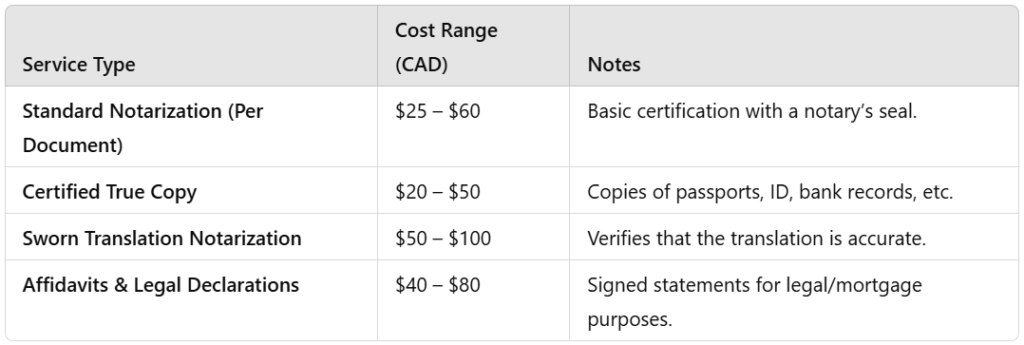
How Much Does Notarization Cost?
Notarization costs vary based on province, document type, and whether additional verification is required.
Where to Get Documents Notarized in Canada?
Notary Public Offices – Independent notary services available in most cities.
Law Firms – Some lawyers offer notarial services for real estate transactions.
Banks & Credit Unions – Some financial institutions offer notarization for account holders.
Online Notary Services – Some provinces allow remote notarization via video call.
TIP: If submitting notarized documents to a lender, confirm whether they require a local Canadian notary or an embassy/consulate notarization for foreign documents.
Summary
Notarization adds legal credibility to documents, ensuring they are authentic, verifiable, and acceptable to lenders and financial institutions. For mortgage applicants using foreign documents, notarization may be mandatory, especially when submitting translated bank statements, income records, or legal contracts.
By working with a qualified notary public, borrowers can prevent unnecessary delays, rejections, or compliance issues—streamlining their mortgage approval process.
Need help finding a notary public near you? Many provinces offer online directories to locate certified notaries in your area.