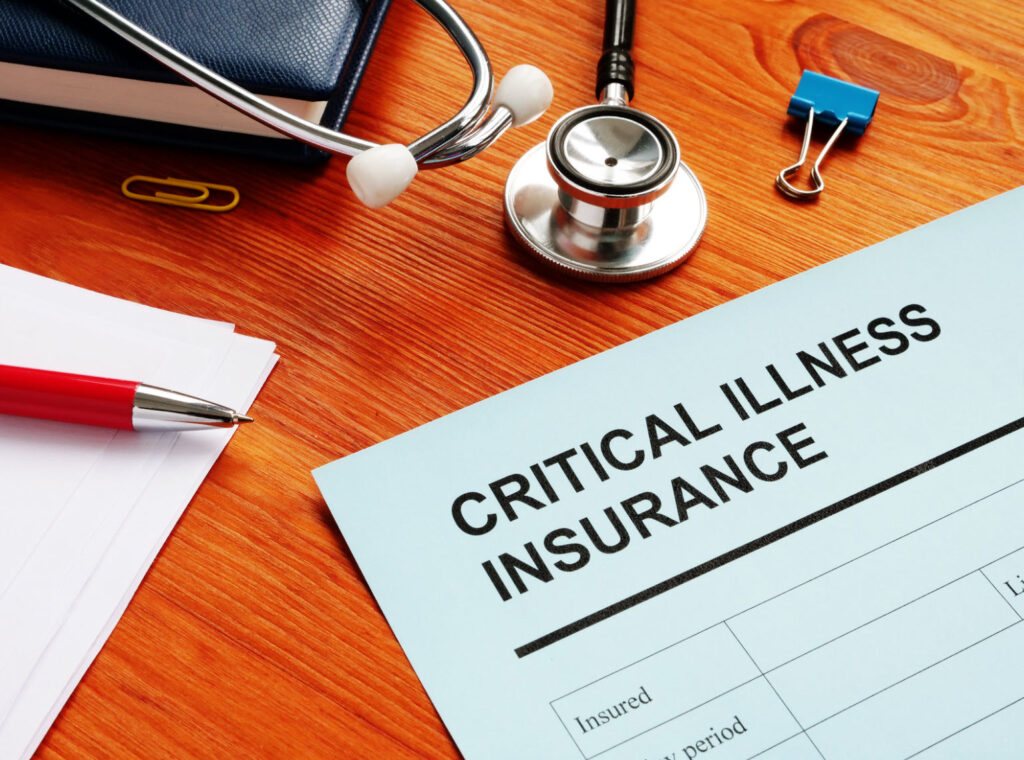
Critical Illness Insurance is a type of insurance policy designed to provide financial support if you are diagnosed with one of the specific critical illnesses covered by the policy. This insurance is meant to help cover costs that are not typically covered by traditional health insurance plans and to alleviate financial burdens during a difficult time. Here’s an overview:
Key Features of Critical Illness Insurance
Lump-Sum Payment:
Upon diagnosis of a covered critical illness, the policy pays out a tax-free, one-time lump sum.
Covered Illnesses:
Commonly includes illnesses like cancer, heart attack, stroke, and other life-threatening conditions. The exact list of covered illnesses varies by policy.
Use of Funds:
The payout can be used for any purpose. This includes medical treatments not covered by health insurance, daily living expenses, paying off debts, or adapting your home to new health needs.
Waiting Period:
There’s typically a waiting period (e.g., 30 days) from the diagnosis of the critical illness to the payout. The patient must survive this period to receive the benefit.
Policy Terms:
Policies vary in terms of coverage amount, term length, illnesses covered, and other conditions.
Benefits
- Financial Security
Provides financial support when you may be unable to work due to illness. - Flexibility
The lump-sum payment can be used for a wide range of needs, offering flexibility during a challenging time. - Peace of Mind
Reduces financial stress, allowing you to focus on recovery. Considerations - Coverage Limitations
Not all illnesses are covered, and policies often have specific criteria for what constitutes a claimable diagnosis. - Cost
Premiums can be relatively high, especially as you age or if you have pre-existing health conditions. - Term vs. Permanent Insurance
Some policies are for a specific term, while others offer lifetime coverage. - Underwriting Process
The process can be rigorous, with medical exams and health questionnaires. Comparing with Other Insurance - Health Insurance
Typically covers medical bills but doesn’t provide cash for other expenses during illness. - Disability Insurance
Provides regular payments if you’re unable to work due to illness or injury, but may not cover additional expenses associated with a critical illness. - Life Insurance
Pays a benefit upon death, but doesn’t provide financial support if you survive a critical illness. Who Should Consider It - Individuals with Family History
If there’s a family history of critical illnesses, you might be at higher risk. - Primary Income Earners
Provides financial support if the main breadwinner is unable to work. - Those Without Adequate Savings
If savings are insufficient to cover expenses during a long-term illness.
Manulife Mortgage Protection Plan
Manulife Mortgage Protection Plan (MPP) is an optional life, critical illness, and disability insurance that you can purchase to help protect yourself, your loved ones, and your home against the unexpected. It’s a convenient, affordable choice whether you have no insurance or want to add to your existing coverage.
There are two types of coverage available to you:
- Mortgage life insurance pays off the outstanding mortgage balance in the event of a death.
- Mortgage disability insurance makes the mortgage payments for you if an extended illness or injury means you can’t work.
61% of Canadians indicate they personally need life insurance coverage.
87% of Canadians agree that credit protection insurance is an easy way to protect themselves and their family
Also Read:
- Required Mortgage Default Insurance
- Insured Insurable Uninsurable Mortgages
- Title Insurance: Protect Your Home
- What is Disability Insurance?
Critical Illness Insurance can be a valuable part of a comprehensive financial plan, offering protection against the financial impacts of serious health conditions. It’s important to carefully review the terms of a policy and consider your personal health risks and financial situation. Consulting with a licensed insurance specialist can help determine if this type of insurance is suitable for you.