(905) 441 0770 allen@allenehlert.com

What Does the Stress Test Prevent?

by | February 17, 2025

What could happen OSFI did not mandate the implementation of the stress test?

If the Office of the Superintendent of Financial Institutions (OSFI) had not mandated the implementation of the mortgage stress test in Canada, several potential risks and consequences could have arisen, affecting individual borrowers, the housing market, financial institutions, and the broader economy. These include:

Increased Household Debt Vulnerability

Heightened Risk of Mortgage Defaults

Overheating of the Housing Market

Financial System Instability

Reduced Lending Standards

Impact on Economic Stability

Long-Term Affordability Challenges

OSFI Maintains Mortgage Stress Test

Increased Household Debt Vulnerability

Without the stress test, more borrowers might have qualified for larger mortgages based on lower interest rates. This could have led to higher levels of household debt, making individuals more vulnerable to financial strain in the event of economic downturns, job losses, or interest rate hikes.

Heightened Risk of Mortgage Defaults

In the absence of the stress test, borrowers who stretched their financial limits to obtain larger mortgages might have faced difficulties making payments if interest rates rose or if their financial circumstances changed. This could have resulted in an increase in mortgage defaults.

Overheating of the Housing Market

The stress test helps moderate housing demand by ensuring that borrowers do not take on more debt than they can afford. Without it, there could have been a continued escalation in housing prices, particularly in hot markets, potentially leading to a housing bubble and unsustainable price growth.

Financial System Instability

A lack of stress testing could have exposed banks and other lenders to greater risks, as their mortgage portfolios would include more loans to highly leveraged borrowers. This could have implications for the stability of the financial system, especially in the face of economic shocks.

Reduced Lending Standards

The stress test serves as a regulatory tool to maintain prudent lending standards. Without it, there might have been a relaxation of lending criteria, increasing the likelihood of riskier lending practices.

Impact on Economic Stability

The broader economy could be impacted by the absence of the stress test. A housing market correction or a wave of defaults could have significant repercussions on consumer spending, economic growth, and financial stability.

Long-Term Affordability Challenges

While the stress test may make it more difficult for some to purchase homes, it also aims to ensure long-term affordability and sustainability. Without it, more borrowers might find themselves in homes they cannot afford in the long run.
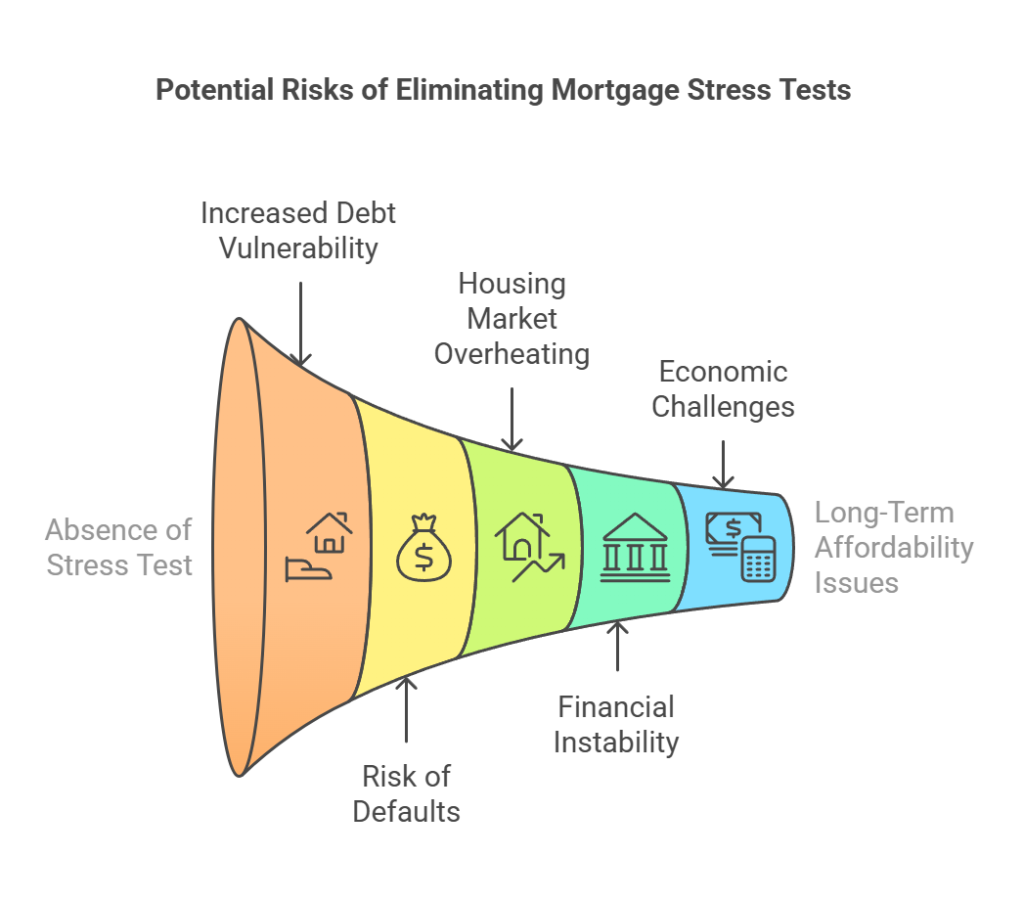
It’s important to note that while the stress test aims to mitigate these risks, it is also subject to criticism and debate, particularly regarding its impact on housing accessibility and affordability for certain groups of borrowers. The balance between financial prudence and housing market accessibility remains a key consideration in the ongoing evaluation and adjustment of mortgage lending policies in Canada.

Mortgage and Money Radio Logo
Allen Ehlert

Allen Ehlert

Allen Ehlert is a licensed mortgage agent. He has four university degrees, including two Masters degrees, and specializes in real estate finance, development, and investing. Allen Ehlert has decades of independent consulting experience for companies and governments, including the Ontario Real Estate Association, Deloitte, City of Toronto, Enbridge, and the Ministry of Finance.

Closing Costs: Commercial Vs Residential

Closing Costs: Commercial vs. Residential

Closing Costs: Commercial vs. Residential. Residential closing costs are usually more predictable. Commercial closing costs, on the other hand, can feel like opening a junk drawer: legal fees, lender fees, environmental reports, appraisals, accounting advice, GST/HST questions, lease reviews, zoning issues, and sometimes a few “where did that come from?” moments.

Understanding IRR

Understanding Internal Rate of Return (IRR)

Understanding Internal Rate of Return (IRR): In real estate, it’s easy to get caught up in surface-level numbers—cash flow, purchase price, appreciation. But if you really want to operate like a professional investor, and guide your clients like one, you need a metric that answers a deeper question

Mortgage Term: Supplemental Executive Retirement Plan

Discover what a supplemental executive retirement plan is, and how it impacts the strategic real estate and financial planning for executives.

Calculate Housing Costs

How to Calculate Housing Cost

To ensure you do not spend more than 30% of your income on housing costs, it's important to understand how to calculate your housing expenses. In Canada, housing costs typically include: Mortgage Payments: The monthly amount paid towards the mortgage principal,...
Interest Rate Impact on Property Value

The Impact of Mortgage Rates on Residential Property Values

The potential consequences of escalating mortgage rates on the valuation of residential properties are leading to a projected decline of 5% in home prices. By analyzing the impact of rising interest rates on the housing market, my research seeks to shed light on the...
Closer Connection Exception

Mortgage Term: Closer Connection Exception

Discover the implications of the Closer Connection Exception and how it impacts cross-border real estate transactions between Canada and the United States.

Commercial Financing Layers

Using Layers in Commercial Financing

Using layers in commercial financing. Each layer has its purpose so you don’t have to play by any one lender’s rules.

Cash Damming

Understanding Cash Damming

Cash damming is one of the most effective—and least understood—ways to take advantage of this gap. It’s not about taking on more risk, spending more money, or changing your lifestyle.

Emphyteusis

Term of the Day: Emphyteusis

Discover the meaning and application of emphyteusis and its impact on long-term lease arrangements.

Calculating Debt Service Ratios

Calculating Debt Service Ratios (GDS/TDS)

Discover how to calculate Debt Service Ration for mortgage affordability in Canada.