
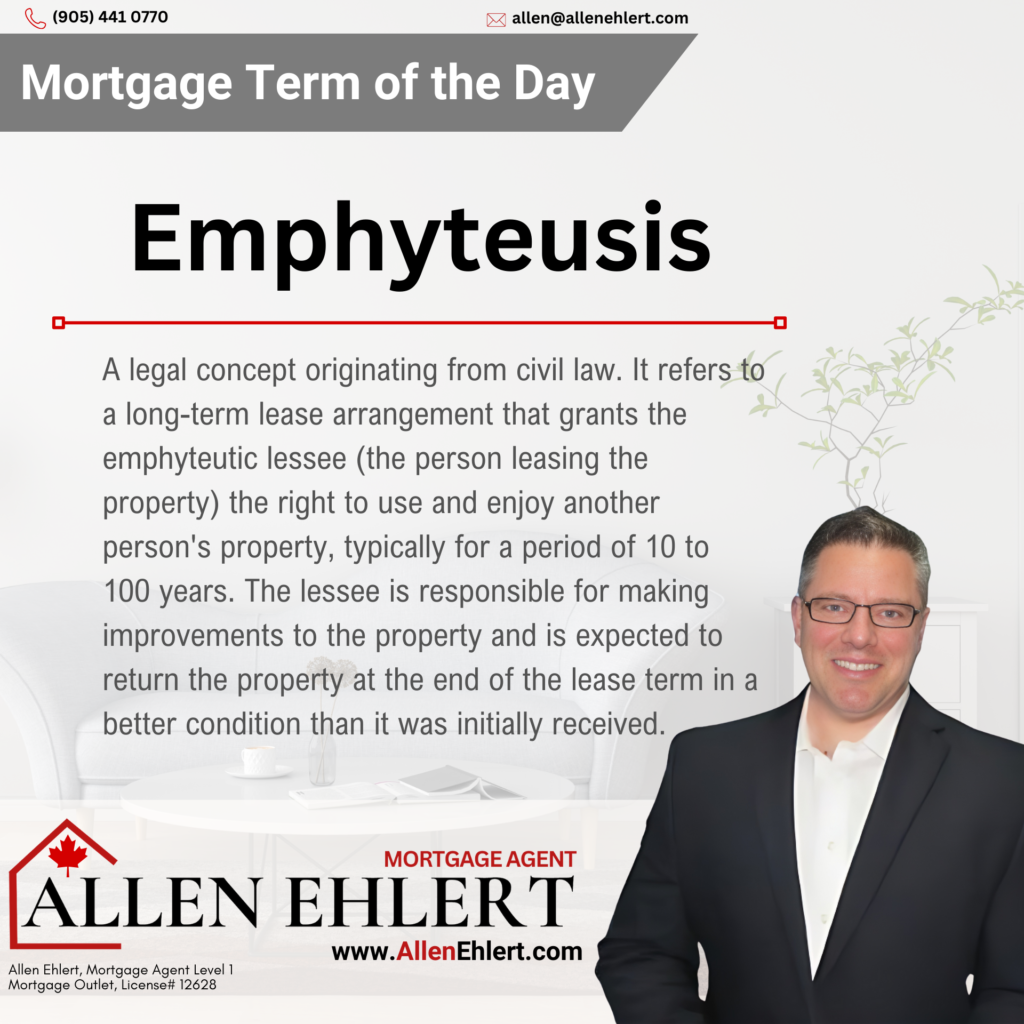
In Canada, particularly in the province of Quebec, emphyteusis is a legal concept originating from civil law. It refers to a long-term lease arrangement that grants the emphyteutic lessee (the person leasing the property) the right to use and enjoy another person’s property, typically for a period of 10 to 100 years. The lessee is responsible for making improvements to the property and is expected to return the property at the end of the lease term in a better condition than it was initially received.
Key Features of Emphyteusis
Emphyteusis has the following features:
- Long-term lease
- Obligation to improve
- Right of use and profit
- Return of property
Long-Term Lease
Emphyteusis involves a long-term lease, usually lasting from 10 to 100 years, during which the lessee has extensive rights over the property, similar to those of an owner.
Obligation to Improve
The emphyteutic lessee is required to improve the property significantly. This could involve constructing buildings, making major renovations, or otherwise enhancing the property’s value. The improvements made during the lease period must be substantial and beneficial to the property.
Right of Use and Profit
The lessee can use the property and benefit from it, such as by living there, renting it out, or conducting business activities. The lessee enjoys most of the benefits of ownership, even though the property legally belongs to the lessor (the property owner).
Return of Property
At the end of the emphyteutic lease term, the lessee must return the property to the lessor. The property must be in better condition, reflecting the improvements made by the lessee during the lease term.
Emphyteusis and Mortgages
Emphyteusis can have specific implications for mortgages, especially in Quebec where this legal structure is recognized.
- Mortgage financing
- Lender’s risk
- Property improvements
- End of lease term
- Legal considerations
Mortgage Financing
Obtaining a mortgage on an emphyteutic property can be complex. Since the property is technically owned by the lessor and only leased to the lessee for a long term, lenders may perceive a higher risk. The mortgage would typically be secured against the lessee’s rights under the emphyteutic lease, rather than against full ownership of the property.
Lender’s Risk
The primary risk for lenders is that the lessee does not actually own the property outright. If the lessee defaults on the mortgage, the lender’s ability to foreclose and recover the loan is limited to the lessee’s interest in the emphyteutic lease, which might be less valuable than full ownership.
Property Improvements
Since the lessee is obligated to improve the property, the cost of these improvements may be included in the mortgage. Lenders need to evaluate the potential value added by these improvements and whether they justify the loan amount.
End of Lease Term
The end of the emphyteutic lease term poses another risk for lenders. When the lease ends, the property (including the improvements) reverts to the lessor, potentially leaving the lessee with no collateral to back the remaining mortgage balance. This situation can complicate mortgage terms and conditions.
Legal Considerations
Both the lessee and the lender must carefully consider the legal framework governing emphyteusis. Any mortgage agreement involving an emphyteutic lease should include detailed provisions to address the unique risks associated with this type of arrangement, including what happens if the lease ends prematurely or if the lessee defaults.
Summary
In summary, emphyteusis in Canada is a civil law concept, primarily recognized in Quebec, that involves a long-term lease where the lessee has extensive rights over the property and is obligated to make significant improvements. In relation to mortgages, emphyteusis presents unique challenges and risks, particularly regarding the security of the mortgage and the rights of the lender. It requires careful legal and financial planning to ensure that all parties understand their rights and obligations, especially in the context of property improvements and the end of the lease term.











