… Not All Alternative Mortgages Are Created Equal
If you’ve spent any time around mortgages, you’ve probably heard the phrase “alternative lending” used as if it’s one big bucket. It isn’t. Not even close.
In reality, Canada’s alternative lending space has two very different lanes — and knowing which lane a borrower belongs in can mean the difference between a smooth approval and a stressful, expensive surprise. This article breaks that down clearly, honestly, and without the fluff.
You’ll see why some borrowers land in light alternative lending, why others require heavy alternative lending, and how pricing, structure, and expectations shift as risk increases.
Topic Headings Covered in This Article:
What Alternative Lending Means in Canada
Where Alternative Lending Fits Within the Canadian Mortgage Ladder
Light Alternative Lending: Prime-Adjacent Solutions
Heavy Alternative Lending: Risk-Priced and Transitional
The Real Differences Between Light and Heavy Alternative Lending
Borrower Profiles: Who Uses Which Tier and Why
A Real-World Story: Two Borrowers, Two Outcomes
How Realtors and Clients Can Use This Knowledge in Practice
How I Help Borrowers Navigate the Alternative Lending Spectrum
What Alternative Lending Means in Canada
Alternative lending exists because real people don’t live inside bank policy boxes. Life creates income complexity, credit hiccups, property quirks, and timing issues — and the alternative space fills the gap between rigid Prime lending and blunt private lending.
But here’s the key insight:
Alternative lending isn’t one category — it’s a spectrum of risk.
Within that spectrum, risk is assessed, priced, and structured differently. That’s where light and heavy alternative lending come in.
Where Alternative Lending Fits Within the Canadian Mortgage Ladder
To really understand light and heavy alternative lending, you have to see where it sits on the Canadian Mortgage Ladder. Think of the ladder as a progression of risk, flexibility, and pricing. At the bottom rung is Prime lending — lowest risk, lowest cost, strictest rules.
At the top rung is private and MIC lending — highest cost, shortest terms, and almost entirely asset-based. Alternative lending lives squarely in the middle, acting as the shock absorber between rigid bank policy and blunt private capital.
Light alternative lending sits just one rung above Prime, designed to catch strong borrowers who miss on structure, not substance. Heavy alternative lending sits one rung below that, absorbing real but manageable credit risk — still income- and intent-driven, but priced accordingly.
The critical insight is this: alternative lending is not a downgrade, it’s a transition rung. The goal is rarely to stay there. The goal is to climb — from heavy alternative to light alternative, and ultimately back to Prime — with intention, strategy, and timing.
Light Alternative Lending: Prime-Adjacent Solutions
Light alternative lending is best understood as Prime lending with flexibility.
These borrowers are fundamentally sound. The issue isn’t who they are — it’s how their file fits into a bank’s underwriting model.
Who This Is For
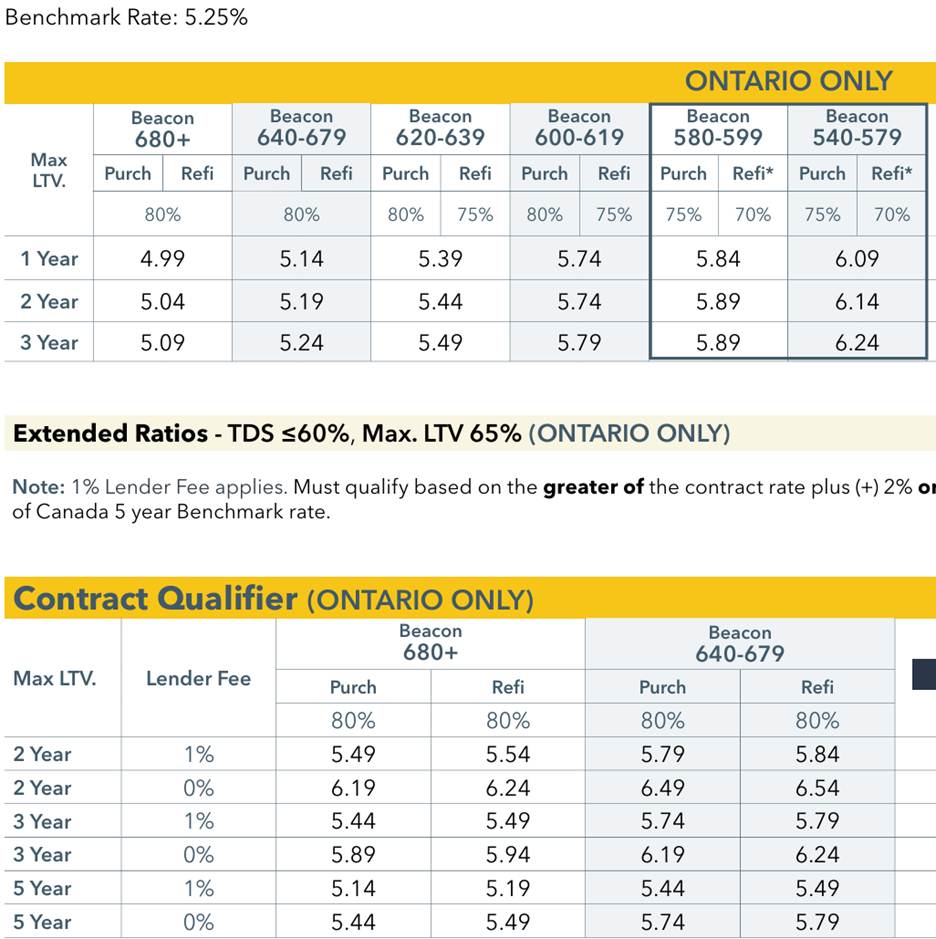
- Credit generally in the mid-600s to low-700s
- Strong equity or reasonable down payment
- Income that’s legitimate but hard to document
- Minor credit blemishes, not systemic issues
- Standard properties
Think: good borrowers with messy paperwork.
Common Reasons Borrowers End Up Here
- Self-employed or incorporated income
- Commission or bonus-heavy compensation
- Recent job or industry changes
- Temporary credit score dips
- Slight policy misses at major banks
What the Mortgage Looks Like
- Rates modestly higher than Prime
- Lender fees exist, but are controlled
- 25–30 year amortizations common
- Clear and realistic exit back to Prime
This is where lenders like Strive Capital and Aspire typically operate.
Light alternative lending solves for complexity, not distress.
Heavy Alternative Lending: Risk-Priced and Transitional
Heavy alternative lending exists when risk is real, visible, and measurable — and the lender knows it.
This isn’t punishment. It’s rational pricing.
Who This Is For
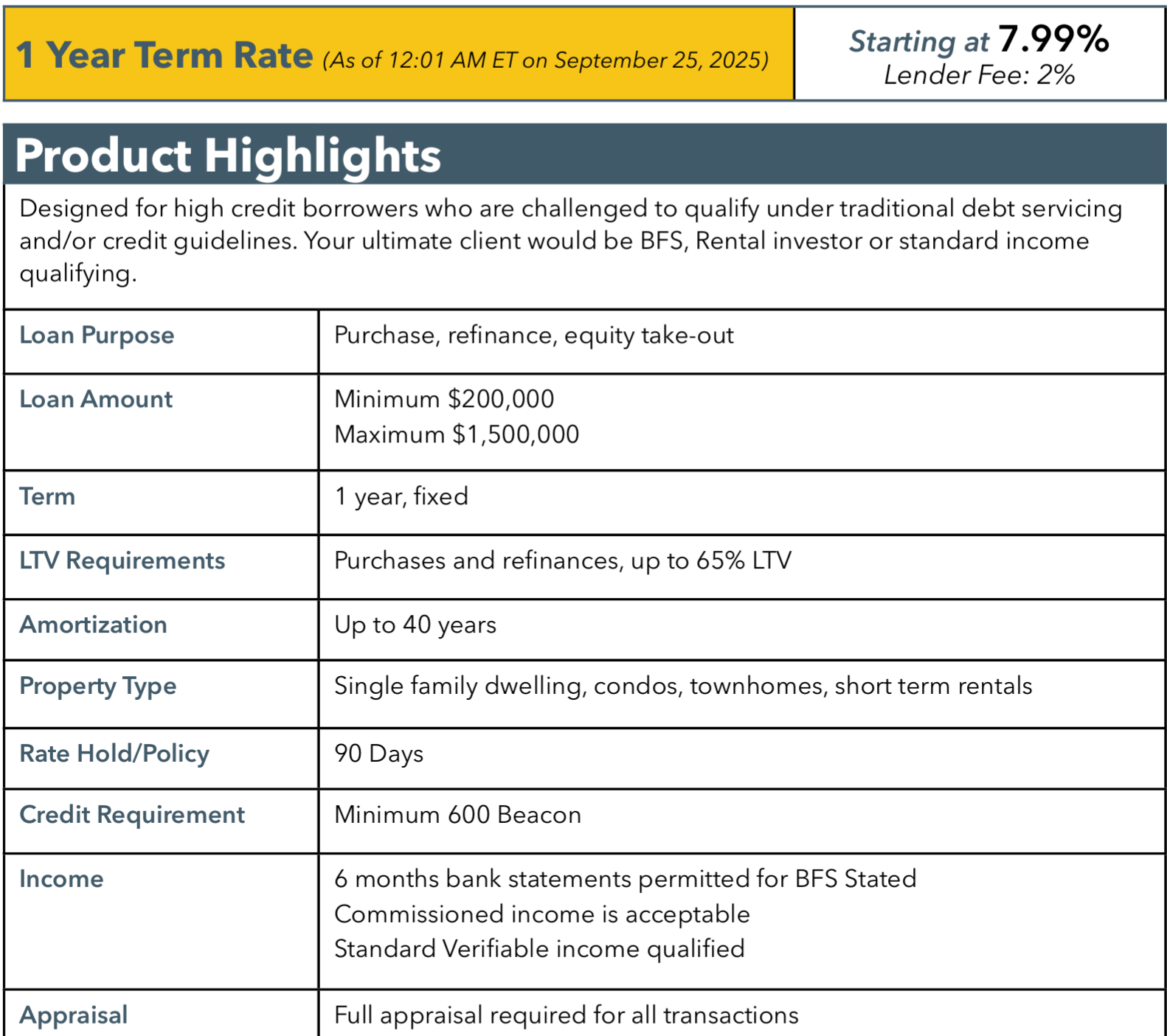
- Credit often below 650
- Collections, late payments, or recent credit events
- Higher debt ratios
- Income volatility or instability
- Files requiring exception-based underwriting
These borrowers may still have equity and strong intent — but the margin for error is thinner.
What the Mortgage Looks Like
- Noticeably higher rates
- Higher lender fees
- Shorter expected hold periods
- Strong emphasis on exit strategy
- Tighter terms and review conditions
Programs such as Aspire Advantage sit firmly in this tier.
Heavy alternative lending is transitional by design. It’s a bridge — not a destination.
The Real Differences Between Light and Heavy Alternative Lending
| Feature | Light Alternative | Heavy Alternative |
| Credit profile | Mostly intact | Actively impaired |
| Risk perception | Low to moderate | High and measurable |
| Rates | Modestly above Prime | Significantly higher |
| Fees | Controlled | Elevated |
| Exit planning | Encouraged | Mandatory |
| Purpose | Solve structure | Absorb risk |
Same category. Very different intent.
Borrower Profiles: Who Uses Which Tier and Why
Light Alternative Borrower Example
You’re self-employed, earn great money, but your tax returns don’t tell the whole story. The bank can’t get comfortable. An alternative lender can.
Why it works:
The issue isn’t income — it’s documentation.
Heavy Alternative Borrower Example
You went through a divorce, missed payments during the transition, and your credit took a hit. You still have equity and stable income, but the recent credit damage matters.
Why it works:
The lender prices the risk, gives you time, and expects improvement.
A Real-World Story: Two Borrowers, Two Outcomes
Let me give you a real-world style scenario.
Two buyers. Same price point. Same city.
Borrower A is self-employed, strong income, 690 credit score, clean history. The bank says no — not enough predictable income history. Light alternative lender steps in, slightly higher rate, clean approval, plan to move to Prime in a year.
Borrower B has a 610 score, recent collections from a separation, and high utilization. Heavy alternative lender approves, but with a higher rate and a clear understanding: this is temporary. Credit cleanup is part of the deal.
Same “alternative” label. Completely different realities.
How Realtors and Clients Can Use This Knowledge in Practice
For Realtors
- Set buyer expectations early
- Explain pricing without killing the deal
- Reduce late-stage financing surprises
- Keep transactions alive that banks would sink
For Clients
- Understand why pricing changes
- Remove shame from non-prime approvals
- See alternative lending as a strategy
- Plan the next step instead of panicking
When everyone understands the lane they’re in, deals close cleaner.
How I Help Borrowers Navigate the Alternative Lending Spectrum
This is where working with an experienced mortgage agent matters.
I don’t just place mortgages — I:
- Diagnose why Prime didn’t work
- Decide light vs heavy alternative placement
- Structure deals with the exit already planned
- Coordinate with credit professionals when needed
- Protect future refinancing options
- Communicate clearly with realtors and advisors
Alternative lending done right feels intentional. Done wrong, it feels like a trap.
Allen’s Final Thoughts
Alternative lending isn’t a failure — it’s a tool.
Light alternative lending helps good borrowers deal with complexity.
Heavy alternative lending helps stressed borrowers regain footing.
The mistake is treating them as the same thing.
When you understand where you fall on the spectrum, pricing makes sense, expectations align, and the path forward becomes clear.
And that’s where I come in — to help you choose the right lane, structure it properly, and get you where you actually want to go.
If you’re unsure where you fit, let’s talk. That conversation alone can save you years — and a lot of money.