In Canada, an informal trust is a type of trust that is not formally documented through a legal trust agreement. Instead, it is typically established when one person (the trustee) holds assets on behalf of another person (the beneficiary) without a formal trust document outlining the terms and conditions. Informal trusts are often used for minor children, where a parent or grandparent holds money or assets in their name but with the understanding that the assets are intended for the child’s benefit.
Key-Features-of-an-Informal-Trust Account
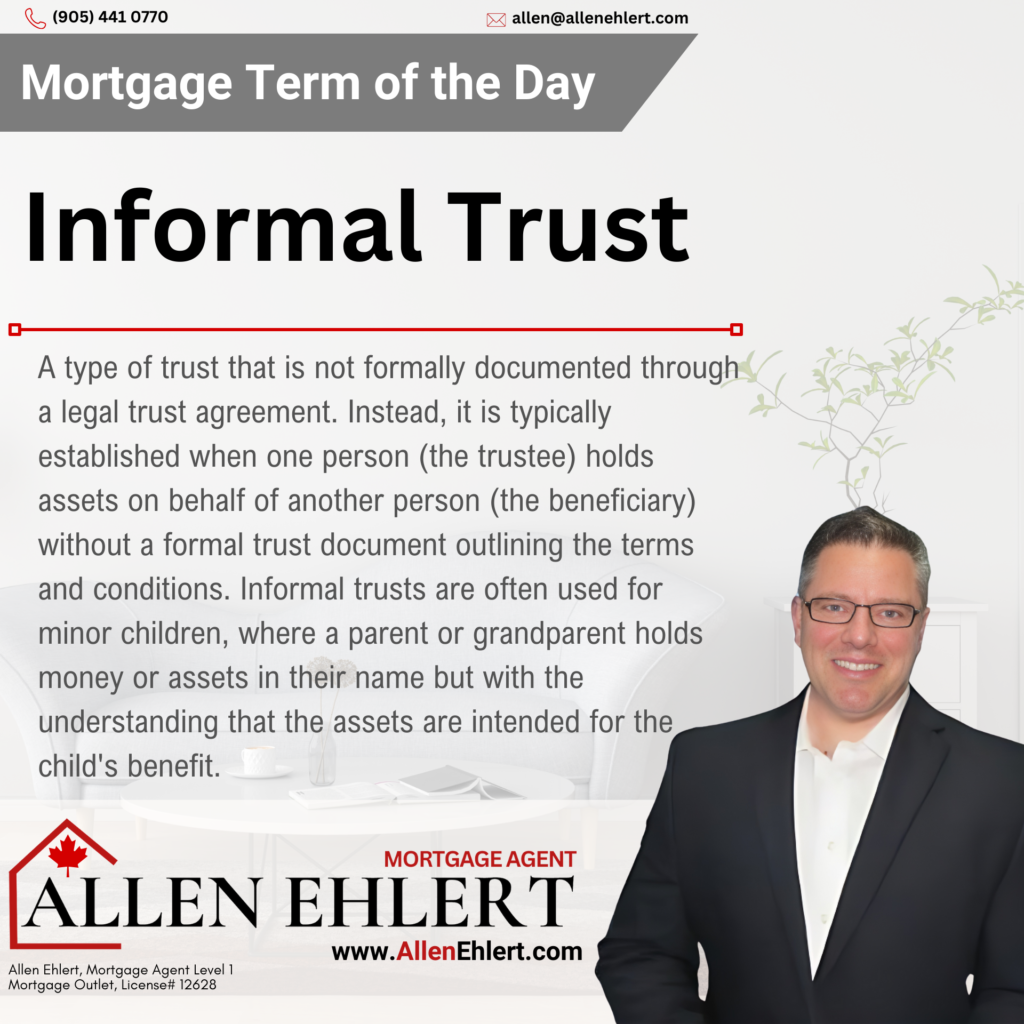
Key Features of an Informal Trust
An informal trust account has the following characteristics:
- Lack of Formal Documentation
- Trustee and Beneficiary
- Common Uses
- Taxation
Lack of Formal Documentation
Unlike a formal trust, an informal trust does not have a detailed legal agreement. The trust is based on the intention and understanding between the parties involved, often indicated by how the account or assets are managed.
Trustee and Beneficiary
In an informal trust, the trustee manages the assets, making decisions about how the assets are used or invested, but does so with the understanding that these assets ultimately belong to the beneficiary.
Common Uses
Informal trusts are commonly used for minor children, where parents or grandparents manage savings or investment accounts on behalf of the child. These accounts are typically intended to benefit the child, such as for education, future living expenses, or a down payment on a home.
Taxation
The income generated by the assets in an informal trust may be taxed in different ways depending on the type of income. For example, interest and dividends are usually attributed to the parent or contributor, while capital gains may be attributed to the child, depending on the circumstances.
Relation to Mortgages
Informal trusts can relate to mortgages in several ways, especially when considering saving for a down payment, estate planning, or helping a child purchase their first home
- Saving for a Down Payment
- Helping with Mortgage Costs
- Impact on Mortgage Qualification
- Estate Planning
- Tax Considerations

Saving for a Down Payment
An informal trust can be used to save and invest money on behalf of a child with the goal of helping them with a future down payment on a home. As the child approaches adulthood, the funds in the trust can be used to provide a significant down payment, which can reduce the size of the mortgage they need and make homeownership more affordable.
Helping with Mortgage Costs
If a child is ready to buy a home but needs financial assistance, the trustee can use the assets in the informal trust to help cover part of the mortgage down payment or even assist with ongoing mortgage payments. This support can make it easier for the child to qualify for a mortgage and manage the costs associated with homeownership.
Impact on Mortgage Qualification
When the beneficiary reaches the age of majority and takes control of the assets in the informal trust, the availability of these funds can enhance their financial profile, potentially making it easier to qualify for a mortgage. Lenders consider the down payment, income, and overall financial situation when assessing mortgage applications, and having a substantial down payment from an informal trust can improve the beneficiary’s borrowing power.
Estate Planning
Parents or grandparents may use informal trusts as part of their estate planning strategy to transfer wealth to the next generation in a relatively simple and flexible manner. These funds can be earmarked for significant life events, such as purchasing a home, which can help the beneficiary avoid taking on excessive mortgage debt.
Tax Considerations
The tax treatment of income from assets held in an informal trust can influence how much is available to help with a mortgage. For example, capital gains attributed to the beneficiary may be taxed at a lower rate, preserving more of the funds for a down payment or other housing-related expenses.
Summary
An informal trust in Canada is a flexible, non-documented arrangement where one person holds assets for the benefit of another, often a minor child. These trusts can play a significant role in saving for a future down payment or helping with mortgage costs, thereby supporting the beneficiary’s path to homeownership. While informal trusts offer simplicity and flexibility, they also require careful management, especially in terms of tax implications and the eventual transfer of assets to the beneficiary when they reach the age of majority. Understanding how an informal trust can be used in relation to mortgages is crucial for effective financial planning and supporting the next generation in achieving homeownership.