… Cutting Through Canada’s Confusing Land Transfer Tax Regimes
If you’ve ever bought real estate in Canada, you’ve probably run headfirst into the dreaded land transfer tax (LTT). It’s one of those costs that sneaks up on buyers and can quickly turn a dream deal into sticker shock if you’re not prepared. The catch? Land transfer tax isn’t the same across the country. It changes from province to province, and in some places, even from city to city. Some regions give first-time buyers a break, others don’t. And believe it or not—there are parts of Canada where you don’t pay land transfer tax at all.
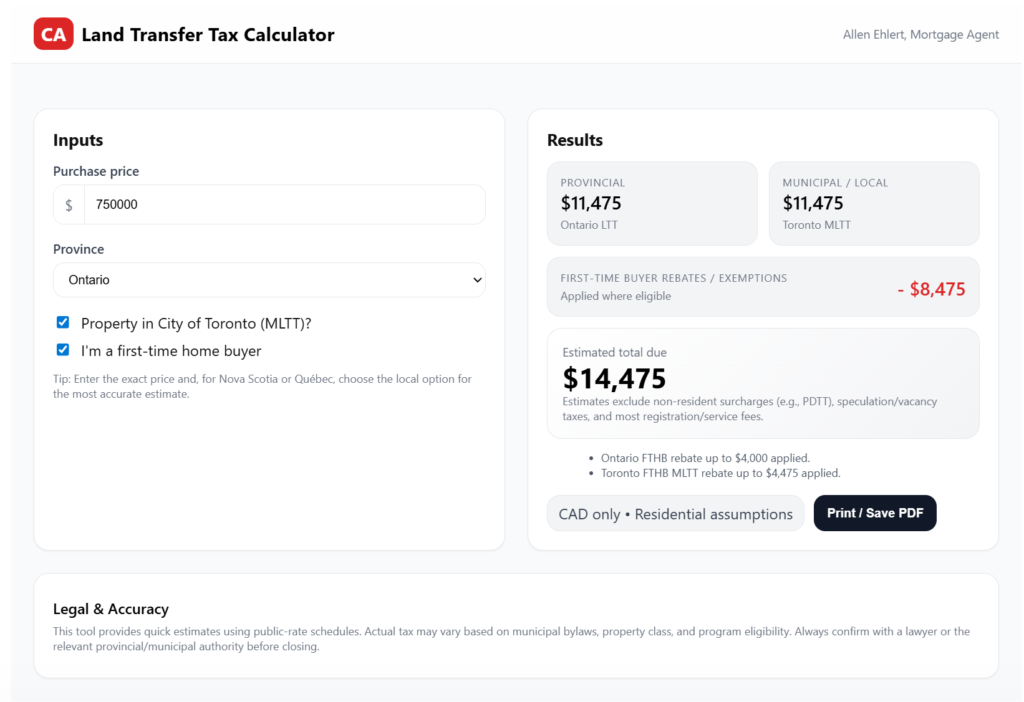
That’s where my Ultimate Canadian Land Transfer Tax Calculator comes in. It’s designed to cut through all the red tape and show you the exact amount you’ll owe, no matter where you’re buying. Think of it as your GPS for one of the trickiest parts of closing costs.
Here’s what we’ll dig into today:
Understanding Land Transfer Tax in Canada
How to Use Allen’s Calculator Step-by-Step
Real-World Examples for Realtors and Clients
A Story That Brings It All Home
Understanding Land Transfer Tax in Canada
Land transfer tax is essentially a government fee for transferring ownership of property. It’s not rolled into your mortgage—you’ve got to pay it upfront, usually at closing. The tricky part? It’s not a one-size-fits-all rule across Canada.
- Ontario, B.C., Quebec, and others: They all have provincial LTT systems with tiered brackets, much like income tax.
- Toronto: Adds its own municipal land transfer tax on top of the provincial one—yep, double whammy.
- First-time homebuyers: Some provinces, like Ontario and B.C., offer generous rebates for first-timers. Others? Not so much.
- Exemptions: In places like Alberta and Saskatchewan, there’s no land transfer tax at all. Instead, you might just pay a small registration fee.
This patchwork system makes it nearly impossible to calculate costs in your head. That’s why the calculator is so handy—it adjusts for each jurisdiction’s rules automatically.
How to Use Allen’s Calculator Step-by-Step
Using the calculator is refreshingly simple. Here’s how to get the most out of it:
- Enter the purchase price of the property.
- Select the province and municipality.
- Check off if you qualify as a first-time homebuyer.
- Hit calculate.
In seconds, you’ll see exactly what you owe. No guesswork, no combing through government websites, no surprises when your lawyer hands you the closing bill.
Real-World Examples for Realtors and Clients
For clients, this tool is all about peace of mind. Imagine you’re eyeing a condo in downtown Toronto at $800,000. Without the calculator, you’d have to remember that Toronto charges both provincial and municipal LTT, plus factor in the first-time buyer rebate if you qualify. The calculator does it instantly and tells you if you’re on the hook for tens of thousands—or if you’ll shave some off thanks to rebates.
For realtors, this is pure gold in the client trust department. Instead of shrugging when a client asks, “How much will land transfer tax cost me?” you can pull out the calculator and walk them through it. That kind of transparency positions you as the go-to professional who’s not just selling homes, but guiding buyers through the fine print.
A Story That Brings It All Home
Let’s say Jason and Priya are moving from Calgary to Mississauga. Back in Alberta, they didn’t pay land transfer tax on their home purchase—just a small registration fee. They were floored when their Ontario realtor mentioned land transfer tax for their new $950,000 home.
Cue the calculator. They plugged in the numbers, selected Mississauga, and saw exactly what they’d owe. Yes, it was a hefty sum, but because Priya was a first-time buyer, the rebate softened the blow. That clarity helped them budget properly and avoid any nasty surprises at closing. Instead of panic, they felt prepared—and grateful.
Allen’s Final Thoughts
Land transfer tax is one of those costs that can feel like a moving target. Every province (and sometimes city) does it differently, and unless you’re knee-deep in real estate every day, it’s easy to underestimate.
With the Ultimate Canadian Land Transfer Tax Calculator, you’ll always know where you stand. Whether you’re buying your first home, upgrading, or relocating across the country, this tool makes sure you’re never blindsided by one of the most significant closing costs out there.
Knowledge is power, and in real estate, it’s also peace of mind.
How I Can Support You
As your mortgage agent, I don’t just help you get approved for financing—I make sure you’re prepared for the whole financial picture. That includes often-overlooked costs like land transfer tax.
Here’s how I can help:
- Walk you through land transfer tax scenarios in different provinces.
- Coordinate with your realtor and lawyer so you’re never caught off guard.
- Show you how rebates (like first-time buyer credits) apply to your situation.
- Help you factor these costs into your budget so your closing day feels like a celebration, not a financial ambush.
So, whether you’re buying in Toronto, Vancouver, Halifax—or somewhere in between—reach out. Together, we’ll make sure every dollar is accounted for and your homebuying journey is as smooth as possible.