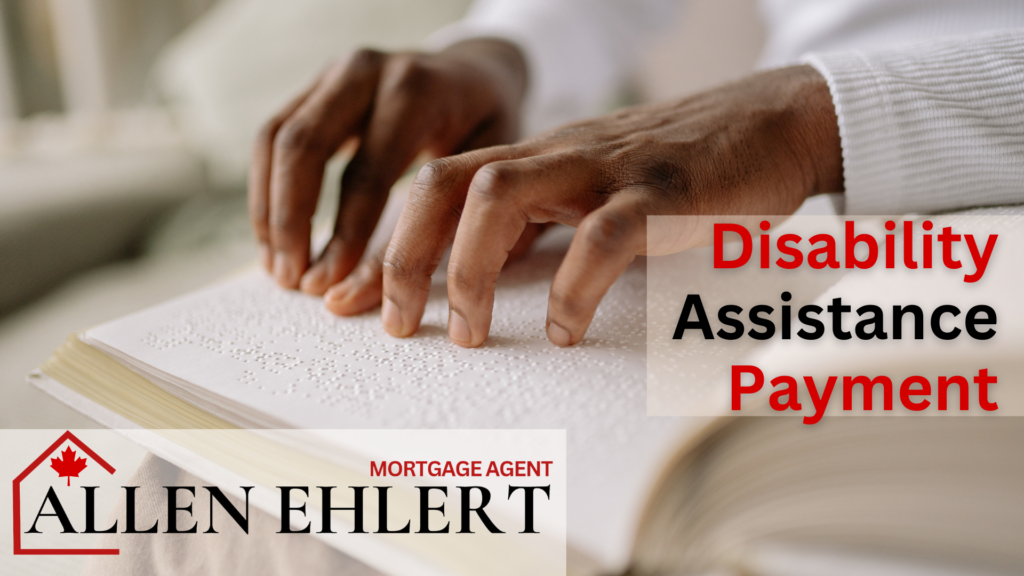
In Canada, a Disability Assistance Payment (DAP) refers to withdrawals made from a Registered Disability Savings Plan (RDSP). The RDSP is a government-registered savings plan designed to help parents and others save for the long-term financial security of a person with a disability. The DAP is one of the ways that the funds in an RDSP can be accessed and used by the beneficiary, who is a person with a disability.
Key Features of Disability Assistance Payments (DAPs)
Disability Assistance Payments and Mortgages

Details of Disability Assistance Payments (DAPs)
A Disability Assistance Payments (DAPs) has the following details:
- Purpose
- Who Can Receive DAPs
- Frequency of Withdrawals
- Tax Treatment
- Impact on Government Benefits
Purpose
DAPs are intended to provide financial support to the beneficiary, helping to cover living expenses, medical needs, and other costs associated with living with a disability.
Who Can Receive DAPs
Only the beneficiary of the RDSP can receive DAPs. The beneficiary must be eligible for the Disability Tax Credit (DTC).
Frequency of Withdrawals
DAPs can be made at any time, but there are certain restrictions and rules that govern the timing and amount of withdrawals. Regular withdrawals that occur annually after the beneficiary turns 0 are known as Lifetime Disability Assistance Payments (LDAPs).
Tax Treatment
DAPs are generally composed of contributions, government grants, bonds, and investment income. While contributions are not taxable, the portions of the DAPs that come from grants, bonds, and investment income are taxable in the hands of the beneficiary.
Impact on Government Benefits
Withdrawals from an RDSP, including DAPs, do not affect eligibility for federal disability benefits, such as the Canada Disability Pension, Old Age Security (OAS), or the Guaranteed Income Supplement (GIS).
Disability Assistance Payments and Mortgages
Disability Assistance Payments (DAPs) can relate to mortgages in several ways, particularly when considering the financial planning needs of individuals with disabilities and how these funds might be used to support housing
- Using DAPs for Mortgage Payments
- Funding a Down Payment
- Ensuring Housing Stability
- Accessibility Modifications
- Estate Planning and Mortgage Payoff
- Tax Implications and Mortgage Planning
Using DAPs for Mortgage Payments
The funds received through DAPs can be used by the beneficiary to help cover monthly mortgage payments, property taxes, or other housing-related costs. For individuals with disabilities who own their own homes, DAPs can provide a steady stream of income to help manage these expenses.
Funding a Down Payment
Although the primary intent of RDSPs and DAPs is long-term financial security, beneficiaries may consider using some of the funds to contribute towards a down payment on a home. This could help reduce the amount of the mortgage needed, resulting in lower monthly payments and interest costs over time.
Ensuring Housing Stability
Regular DAPs can help ensure that individuals with disabilities have a reliable source of income to maintain their housing, whether through making mortgage payments or covering rent. This financial stability is crucial for securing long-term housing and avoiding foreclosure or other housing-related financial difficulties.
Accessibility Modifications
If the beneficiary already owns a home, DAPs can be used to fund necessary accessibility modifications, such as installing ramps, widening doorways, or making bathroom renovations. These improvements can make the home more suitable for the beneficiary’s needs and may even increase the property’s value.
Estate Planning and Mortgage Payoff
Families planning for the long-term care of a disabled relative might use an RDSP as part of their estate planning strategy. Upon the beneficiary’s receipt of DAPs, these funds could be allocated towards paying off an existing mortgage, thereby securing the home for the beneficiary’s future.
Tax Implications and Mortgage Planning
While the portion of DAPs derived from investment income, grants, and bonds is taxable, careful planning can help manage the tax impact, allowing more of the funds to be directed towards mortgage-related expenses.
Summary
A Disability Assistance Payment (DAP) in Canada is a withdrawal from a Registered Disability Savings Plan (RDSP) designed to provide financial support to individuals with disabilities. DAPs can play an important role in supporting mortgage-related needs, such as making monthly payments, funding a down payment, or covering the costs of accessibility modifications. By leveraging DAPs, beneficiaries can improve their housing stability and financial security, ensuring that their mortgage and housing needs are met over the long term. Understanding the relationship between DAPs and mortgages can help beneficiaries and their families make informed decisions about housing and financial planning.