In an increasingly globalized world, transferring funds across borders has become a routine task for many. Whether for personal reasons, business transactions, or supporting loved ones abroad, international money transfers are more accessible than ever. However, each country’s banking system may use different methods to process these transfers, which can sometimes lead to confusion.
How to Send Money Internationally to a Canadian Account
Sending Down Payment on a House

Payment System Differences
To send money from Italy to Canada electronically, the person in Italy can follow these steps, despite the difference in payment systems (IBAN in Italy and SWIFT in Canada):
Use a Bank Transfer (via SWIFT)
SWIFT stands for Society for Worldwide Interbank Financial Telecommunication.
SWIFT is a global messaging network used by financial institutions to securely transmit information and instructions for financial transactions across borders. The SWIFT network is widely used for international wire transfers, ensuring that funds are transferred safely between banks in different countries.
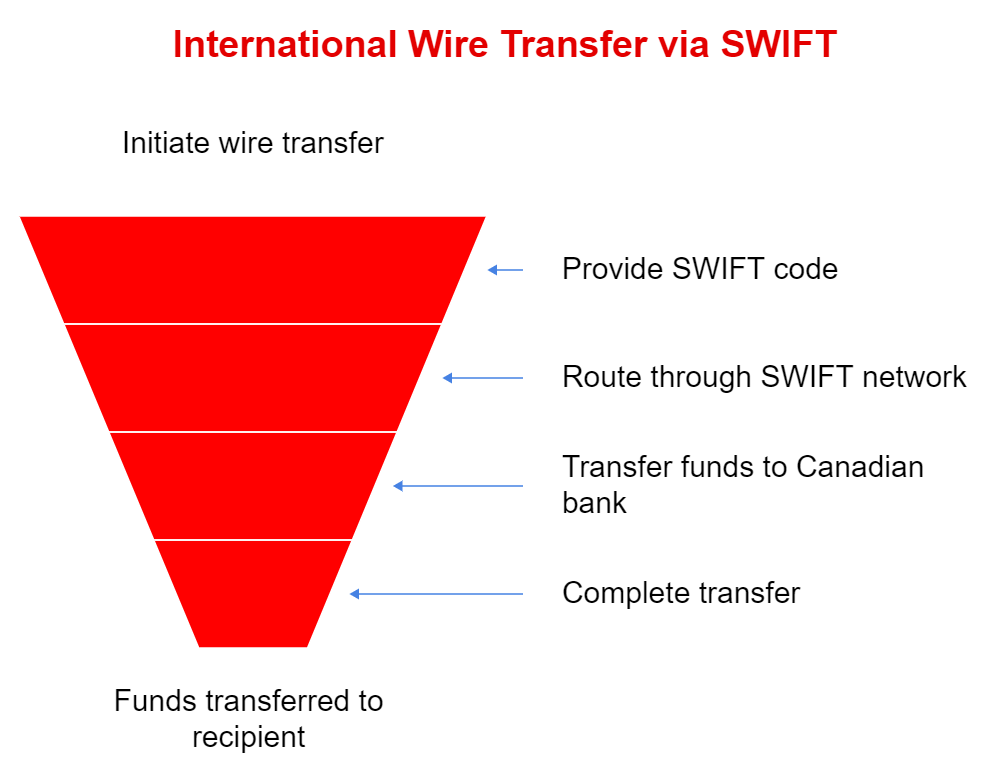
To use SWIFT to do a bank transfer to send funds from Italy to Canada (for example):
- The sender in Italy will initiate an international wire transfer through their bank.
- The sender provides their Italian bank with the SWIFT code of the Canadian recipient’s bank, along with the recipient’s account number.
- The bank in Italy will use the SWIFT network to route the money to the recipient’s Canadian bank.
The recipient’s bank might also ask for an IBAN equivalent, but in Canada, only the SWIFT code and account number are necessary.
Online Money Transfer Services (e.g., Wise, PayPal, Remitly, or Western Union)
- The sender can create an account with an international money transfer service, such as Wise (formerly TransferWise), PayPal, or Remitly.
- The sender chooses Italy as the sending country and Canada as the receiving country.
- The sender provides the recipient’s banking details, which will include the SWIFT code of the Canadian bank, and possibly other details like the account number.
- Complete the transfer. These services often offer better exchange rates and lower fees than traditional bank transfers.
Exchange Rate and Fees
The sender should be mindful of the exchange rates and fees, which vary depending on the method and service used. Online services often offer more competitive rates compared to banks.
In summary, although Italy uses IBAN and Canada uses SWIFT, the SWIFT code of the Canadian bank is the key piece of information needed for a successful transfer from Italy to Canada.
How to Find the SWIFT Code
The SWIFT code typically does not appear on a Canadian bank statement. However, you can easily obtain the SWIFT code for a Canadian bank in the following ways:
- Bank’s Website
- Bank Branch
- Customer Service
- SWIFT Database or Online Search
Bank’s Website
Most banks list their SWIFT codes on their official websites, often in the “International Transfers” or “Contact Us” sections.
Bank Branch
You can contact the local branch of the bank in Canada, and they will provide you with the correct SWIFT code.
Customer Service
Calling the bank’s customer service line will allow you to ask for the specific SWIFT code required for international transfers.
SWIFT Database or Online Search
You can search for a bank’s SWIFT code online by typing the bank’s name followed by “SWIFT code” in a search engine or by using websites like SWIFT.com.
The SWIFT code is typically a unique 8 to 11-character alphanumeric code specific to each bank and sometimes branch. You will need to verify the correct one for the specific branch or use the main branch SWIFT code for international transfers.
For example, the SWIFT code for CIBC (Canadian Imperial Bank of Commerce) is typically CIBCCATT for its main branch in Toronto. This SWIFT code can be used for most international transfers to CIBC accounts unless a specific branch requires a different code.
If the transfer is going to a specific branch, it’s always a good idea to double-check with the recipient or contact the bank directly to ensure you’re using the correct SWIFT code for the intended branch.
Money Sending Process
The SWIFT code (CIBCCATT) identifies the bank (CIBC) and its main branch in Toronto within the international SWIFT network. However, the SWIFT code alone doesn’t specify the recipient’s account.
Here’s how the system works to ensure the money is routed to the correct account:
SWIFT Code
The SWIFT code (e.g., CIBCCATT) directs the international payment to the correct financial institution, in this case, CIBC’s central processing location in Canada.
Recipient’s Account Number
During the transfer process, the sender in Italy will also provide the recipient’s account number (or transit number + account number for Canadian accounts).
The transit number is a unique identifier for the branch where the account is held, and the account number identifies the specific customer’s account at that branch.
Routing via CIBC’s Internal System
Once the funds reach CIBC via the SWIFT network using the code CIBCCATT, CIBC’s internal systems use the transit number (if provided) and account number to route the money to the correct local branch and deposit it into the recipient’s account.
Optional Information
Sometimes, additional information, such as the recipient’s full name and branch address, can also be requested by the sending bank to ensure accuracy.
The SWIFT code ensures the funds reach the right bank (CIBC), and the account number (along with the transit number) ensures they are credited to the correct individual account within that bank.
How to Send Money Internationally to a Canadian Bank Account
If you’re in Italy and need to send money to someone in Canada, the process is straightforward, even though Italy uses the IBAN (International Bank Account Number) system, while Canada uses SWIFT codes. Below is a step-by-step guide on how to send funds from Italy to a Canadian bank account.
Step 1: Gather the Required Banking Information
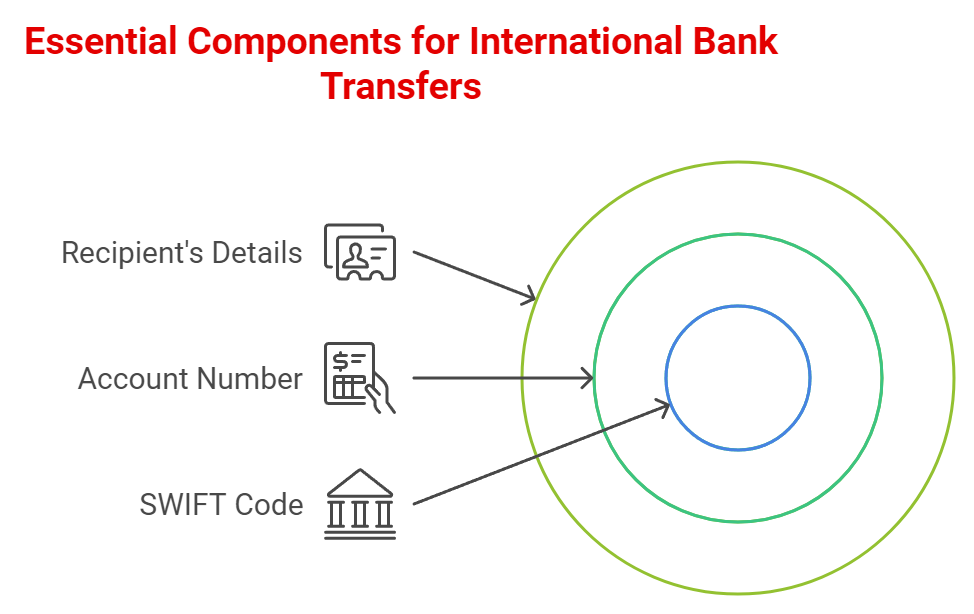
To ensure a smooth transaction, it’s important to have the recipient’s bank details in Canada. This includes:
- SWIFT Code: Canadian banks use the SWIFT system for international transfers. The SWIFT code is an alphanumeric code that identifies the bank and its specific branch. For example, the SWIFT code for the Canadian Imperial Bank of Commerce (CIBC) is CIBCCATT, which directs funds to the main CIBC branch in Toronto. This code ensures that your money reaches the correct bank.
- Account Number: This is the unique number assigned to the recipient’s bank account. For most Canadian banks, you will need the full account number, which may also include the transit number (a 5-digit number that identifies the branch where the account is held).
- Recipient’s Full Name and Bank Details: Ensure you have the recipient’s full name and confirm the bank’s address or any other required details, such as the branch address.
Step 2: Initiate the Transfer
Once you have the required information, there are two primary methods to send the money from Italy to Canada:
- Bank Transfer via SWIFT
- Online Money Transfer Service
Bank-to-Bank Transfer via SWIFT
- Visit your local bank in Italy or use your online banking platform to initiate a transfer.
- Provide the SWIFT code for the recipient’s bank in Canada (e.g., CIBCCATT for CIBC).
- Enter the recipient’s account number, which includes the transit number if applicable.
- Fill in the recipient’s full name and any additional details requested by your bank.
- Confirm the transfer amount and the currency exchange rate. Ensure you understand the fees involved in the transaction, as international wire transfers usually carry a service fee.
Once the transfer is initiated, the money will be routed through the SWIFT network and received by the Canadian bank, which will then credit the funds to the recipient’s account based on the provided account number and transit number.
Online Money Transfer Services
Another option for sending money internationally is to use an online money transfer service, which can often provide better exchange rates and lower fees than traditional banks. Popular services include:
- Wise (formerly TransferWise)
- PayPal
- Remitly
- Western Union
These platforms typically only require the recipient’s account number and bank details (including the SWIFT code) to complete the transfer. Many of these services are accessible online or via mobile apps, allowing for a convenient and faster way to send money internationally.
Step 3: Confirm Exchange Rates and Fees
When sending money internationally, it’s essential to pay attention to the exchange rate between Euros and Canadian Dollars (CAD) and any associated fees. Traditional banks tend to have higher fees for international transfers, so comparing rates with online services is often advisable. Many online services, such as Wise, are known for offering more competitive rates and transparent pricing.
Step 4: Track the Transfer
Most banks and online services provide tracking for international transfers. You can monitor the progress of your transaction to ensure the funds are received promptly. Depending on the method you choose, it may take anywhere from a few hours to several business days for the funds to arrive in the recipient’s account.
Conclusion
Although Italy and Canada use different systems for identifying bank accounts—IBAN in Italy and SWIFT in Canada—sending money across borders is a manageable process. By using the recipient’s SWIFT code, account number, and name, funds can be easily routed to the appropriate Canadian bank. Whether using a traditional bank or an online money transfer service, you have several reliable options for ensuring your money reaches its destination securely and efficiently.
If you frequently make international transfers, exploring various services to find the best exchange rates and lowest fees can save you both time and money in the long run.
Sending Down Payment on a House
To send a large amount of money, for example for a down payment on a house, the process of sending money internationally is the same as described above.
When sending large amounts, confirm the transfer amount and the currency exchange rate. For large transfers, ensure you understand the fees involved, which can be significant. Additionally, some banks may impose daily or per-transaction limits for international transfers, so it’s a good idea to check with your bank beforehand.
NOTE: The largest of the fees concern currency. Mark up.
When sending money internationally, particularly a large sum like $300,000 CAD, it’s essential to pay attention to the exchange rate and any associated fees. Traditional banks tend to have higher fees for international transfers, so comparing rates with online services is often advisable. Many online services, such as Wise, are known for offering more competitive rates and transparent pricing.
Special Considerations
When sending a large sum like $300,000 CAD for a down payment, there are a few additional considerations:
- Verification by Financial Institutions
- Timing
- Currency Exchange Impact
- Proof of Funds
- Tracking
Verification by Financial Institutions: Large transfers are often subject to increased scrutiny by both the sending and receiving banks to ensure compliance with anti-money laundering (AML) laws and international financial regulations. Both the sender and the recipient may need to provide documentation to verify the purpose of the transfer, such as a copy of the real estate purchase agreement, identification, or other supporting documents.
Timing: Ensure the transfer is initiated well in advance of any real estate transaction deadlines. International transfers can sometimes take several business days to process, particularly for larger amounts.
Currency Exchange Impact: When transferring large sums, exchange rates can significantly impact the amount received. If you are sending €300,000, make sure to review the EUR/CAD exchange rate and consider using an online service that offers competitive rates to minimize currency conversion losses.
Proof of Funds: In Canada, the recipient of the money may need to show proof of funds as part of their mortgage application or real estate purchase. Ensure that the transfer documentation is retained and shared with the appropriate financial institutions or legal parties handling the transaction.
Tracking: Most banks and online services provide tracking for international transfers. You can monitor the progress of your transaction to ensure the funds are received promptly. Depending on the method you choose, it may take anywhere from a few hours to several business days for the funds to arrive in the recipient’s account.
Sending money from Italy to Canada for a down payment on a house is a straightforward process when you understand the necessary steps. Although Italy uses the IBAN system and Canada relies on SWIFT codes, international transfers are easily facilitated through the SWIFT network. For large sums, such as $300,000 CAD for a home purchase, it’s essential to ensure that all necessary details are correctly provided, including the recipient’s SWIFT code, account number, and full name.
Limits
There are typically limits on the amount of money that can be sent through different methods, but the limits can vary depending on the service, financial institution, and country regulations. Here’s an overview of the potential limits for different transfer methods:
Bank-to-Bank Transfers (SWIFT)
- Limits: Most banks do not have strict upper limits on the amount you can send via SWIFT, but they may impose daily or per-transfer limits for security reasons or to comply with regulatory requirements. You can usually work with your bank to increase these limits if necessary, especially for larger transactions like sending $300,000 CAD.
- Verification and Documentation: For large transfers, both the sending and receiving banks may require additional documentation, such as the source of funds, purpose of transfer (e.g., down payment), and proof of identity. This is part of anti-money laundering (AML) regulations.
- Fees: Banks often charge higher fees for large transfers, and currency exchange rates may be less favorable than online transfer services.
Online Money Transfer Services
Different online money transfer services have varying limits:
- Wise (formerly TransferWise):
- Limits: Wise has transfer limits based on the country and currency. For example, the limit for transfers from Europe (EUR) to Canada (CAD) can vary but is generally high enough for most personal and business transfers. However, for large amounts like $300,000 CAD, you may need to break the transfer into multiple transactions or use Wise’s business services.
- Verification: Wise may require enhanced identity verification for large sums, including proof of source of funds and purpose of the transfer.
- Fees: Wise typically has lower fees than banks, and their exchange rates are more competitive.
- PayPal:
- Limits: PayPal generally has lower limits compared to traditional bank transfers. The maximum you can send may vary by account type, but for large transfers like $300,000, PayPal is usually not the best option.
- Fees: PayPal’s fees for international transfers can be quite high, especially for large amounts, and their exchange rates may not be as competitive.
- Western Union/Remitly:
- Limits: Western Union and Remitly usually cater to smaller amounts. Western Union allows large transfers, but you may need to complete the transfer in multiple installments for high amounts like $300,000 CAD.
- Fees: Their fees can be substantial for large transfers, and exchange rates may not be as favorable.
Country-Specific Regulations
- Europe: European banks follow strict regulations on sending large sums of money abroad, often requiring enhanced due diligence and documentation to ensure compliance with AML regulations.
- Canada: Receiving large sums of money in Canada may trigger additional scrutiny from financial institutions, and recipients may need to provide documentation to prove the source of funds, particularly for high-value transfers like $300,000 CAD.
Fees
When receiving or sending large amounts of money internationally from a Canadian chartered bank, several types of fees may apply. These fees can vary depending on the bank, the transfer amount, the destination country, and the method used.
Below are the typical fees you might encounter:
- Receiving Wire Transfer Fee
- Sending: Outgoing Wire Transfer Fee
- Currency Conversion Fee
- Intermediary Bank Fees (Correspondent-Fees)
- Receiving Bank Fee
- Additional Fees for Large Transfers
Read more about fees: Fees: Sending and Receiving Money Internationally
Preferred Method
For large transfers, it’s often best to use bank-to-bank transfers via SWIFT, as they tend to accommodate higher amounts and offer secure transfer channels. If using an online money transfer service, verify their limits and ensure the service can handle such a high amount in a single transaction or through multiple transactions.
It is always advisable to inform both your sending and receiving banks in advance of a large transfer to avoid any delays due to security checks. Additionally, ensure that you and the recipient have all necessary documentation, such as proof of source of funds, in case the financial institution requires it for regulatory compliance.
Converting Currency
Whether to convert the money first into the currency you want to send depends on a few factors, such as exchange rates, fees, and the method you are using to send the funds.
Here’s a breakdown to help you decide the best approach:
- Bank Transfer
- Online Money Transfer
- Currency Exchange Platforms
Bank Transfers (via SWIFT)
- Converting First: If you convert the money into the destination currency (e.g., CAD) before sending it, you may have more control over the exchange rate. This allows you to shop around for better rates with currency exchange services or platforms, rather than relying on your bank’s rates.
- Letting the Bank Convert: If you send the money in your local currency (e.g., EUR) and let the receiving bank handle the conversion to CAD, it may be more convenient but usually more expensive. Banks often apply less favorable exchange rates and charge a currency conversion fee, which can make the transaction more costly.
Which is better? It’s typically better to convert the money first through a third-party currency exchange service or an online transfer service that offers better rates and lower fees than traditional banks.
Online Money Transfer Services (e.g., Wise, PayPal)
- Conversion within the Platform: Services like Wise offer highly competitive exchange rates and transparent fees. With these platforms, you don’t need to convert the money first. These services typically provide better rates than banks and allow you to see exactly how much the recipient will get in the local currency (CAD in this case) before confirming the transfer.
Which is better? Using an online transfer service like Wise can be more cost-effective because they provide better exchange rates and show you the final amount in the recipient’s currency.
Currency Exchange Platforms
- Using Currency Brokers: Specialized foreign exchange platforms or brokers may give you access to more favorable rates for large amounts. For example, if you are transferring a large sum like €300,000, using a broker or service like OFX or XE may give you better rates than the bank.
- Risks and Timing: Keep in mind that currency exchange rates fluctuate, so if the rate is favorable, converting the money ahead of time could lock in a good rate. However, if rates are volatile, there is a risk that you may not get the best rate if the currency strengthens later.
Consider the Transaction Fees
- Conversion Costs: If you convert the currency yourself (either through a bank or third-party service), check if there are additional costs, like transaction or service fees.
- Hidden Bank Fees: Banks often bundle exchange rate fees into their transactions, so even if the conversion appears straightforward, you might end up with a higher overall cost when the money is converted by the receiving bank.
When Converting First Is Better
Converting the currency before sending is better when:
You get a better exchange rate by using an online money transfer service or currency broker compared to your bank’s rates.
You want transparency: You know exactly how much the recipient will receive in the local currency.
You’re transferring a large amount: Converting ahead of time helps you take advantage of favorable exchange rates for high-value transfers.
When Letting the Bank Convert Is Better
Converting the currency as part of the sending process is better when:
- Convenience: You may prefer to let the bank handle everything if you prioritize simplicity over saving money.
- You trust the bank’s service: If the exchange rate difference isn’t significant, you might opt for the convenience of using a single institution to handle the entire process.
In most cases, it’s better to convert the money first into the destination currency, especially if you can use an online money transfer service that offers better exchange rates and lower fees than traditional banks. Doing so ensures transparency, allowing you to see the exact amount the recipient will get. However, for smaller amounts or for convenience, letting the bank handle the conversion may be a simpler option, though likely at a higher cost.