Canada’s real estate market has long been a prime destination for international investors, drawn to its stable economy, high quality of life, and strong property appreciation. However, as housing affordability worsened for local residents, the federal government took decisive action by introducing a nationwide ban on foreign home purchases.
The Foreign Buyer Ban, enacted in 2023, was designed to reduce speculative investment, curb foreign ownership in key residential markets, and prioritize housing for Canadian residents. Unlike previous policies, which mainly targeted foreign buyers through provincial taxes, this ban outright prohibits non-residents from purchasing residential properties in most urban areas. Understanding the details of the ban—including its exemptions, penalties, and long-term implications—is crucial for anyone navigating Canada’s real estate market.
What is the Foreign Buyer Ban?
The History Behind Canada’s Foreign Buyer Ban
Where the Ban Applies in Canada
Who is Considered a Foreign Buyer Under the Ban?
What is the Foreign Buyer Ban?
The Foreign Buyer Ban, officially known as the Prohibition on the Purchase of Residential Property by Non-Canadians Act, restricts non-Canadian individuals and entities from purchasing residential property in Canada for a period of two years (2023-2025), however, this has been extended to January 1, 2027. The law aims to curb speculative investment and increase housing availability for Canadian residents.
What Transactions Are Restricted?
- Foreign nationals cannot purchase residential properties in major urban areas.
- The ban applies to single-family homes, condos, and properties with up to three units.
- Foreign-controlled corporations are also prohibited from acquiring residential properties.
Who Enforces the Ban?
- Government agencies monitor transactions, with real estate professionals and lawyers responsible for compliance.
- Violations can result in financial penalties and forced property sales.
The History Behind Canada’s Foreign Buyer Ban
The Prohibition on the Purchase of Residential Property by Non-Canadians Act was introduced because:
- Home prices soared between 2020-2022, making homeownership unattainable for many Canadians.
- Speculative foreign investment was blamed for inflating property values, particularly in cities like Toronto and Vancouver.
- Political pressure from housing advocates and opposition parties pushed the government to implement stricter foreign ownership laws.
Historical Context:
- 2016: British Columbia introduces a 15% foreign buyer tax in Metro Vancouver.
- 2017: Ontario implements the Non-Resident Speculation Tax (NRST) in the Greater Golden Horseshoe.
- 2022: The federal government announces a full ban on foreign home purchases.
- 2023: The ban comes into effect on January 1st, 2023, with an expiration date of January 1st, 2025.
Where the Ban Applies in Canada
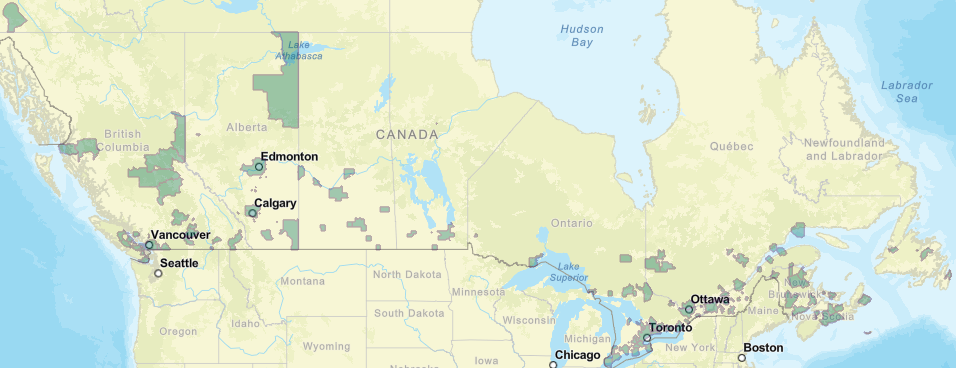
The ban primarily targets urban centers with high foreign investment activity. Properties in major cities like Toronto, Vancouver, Montreal, and Ottawa are affected.
Properties in urban areas are in what is called a Census Metropolitan Area or Census Agglomeration. There properties:
- Census Metropolitan Areas must have a total population of at least 100,000, with 50,000 or more living in the core.
- Census Agglomeration must have a population of at least 10,000.
See the Census Metropolitan Area and Census Agglomeration Guidance Tool to determine if a given property is in a CMA or CA area.
Rural areas and some vacation properties may be exempt.
Who is Considered a Foreign Buyer Under the Ban?
A foreign buyer is defined as:
- Non-Canadian citizens or non-permanent residents.
- Foreign-controlled corporations or entities with significant foreign ownership.
- Taxable trustees purchasing on behalf of a foreign buyer.
Who is NOT Considered a Foreign Buyer?
- Canadian citizens and permanent residents (even if living abroad).
- Refugees and protected persons.
- Corporations controlled by Canadian citizens or PRs.
Exemptions to the Foreign Buyer Ban
While the ban is strict, certain exemptions apply:
- Work Permit Holders – If they have been in Canada for at least three years and filed taxes.
- International Students – If they have been in Canada for at least five years and meet financial requirements.
- Multi-Unit Residential Purchases – Foreign buyers can still invest in properties with four or more units.
- Commercial Properties – Foreign investors can purchase industrial, office, and retail properties.
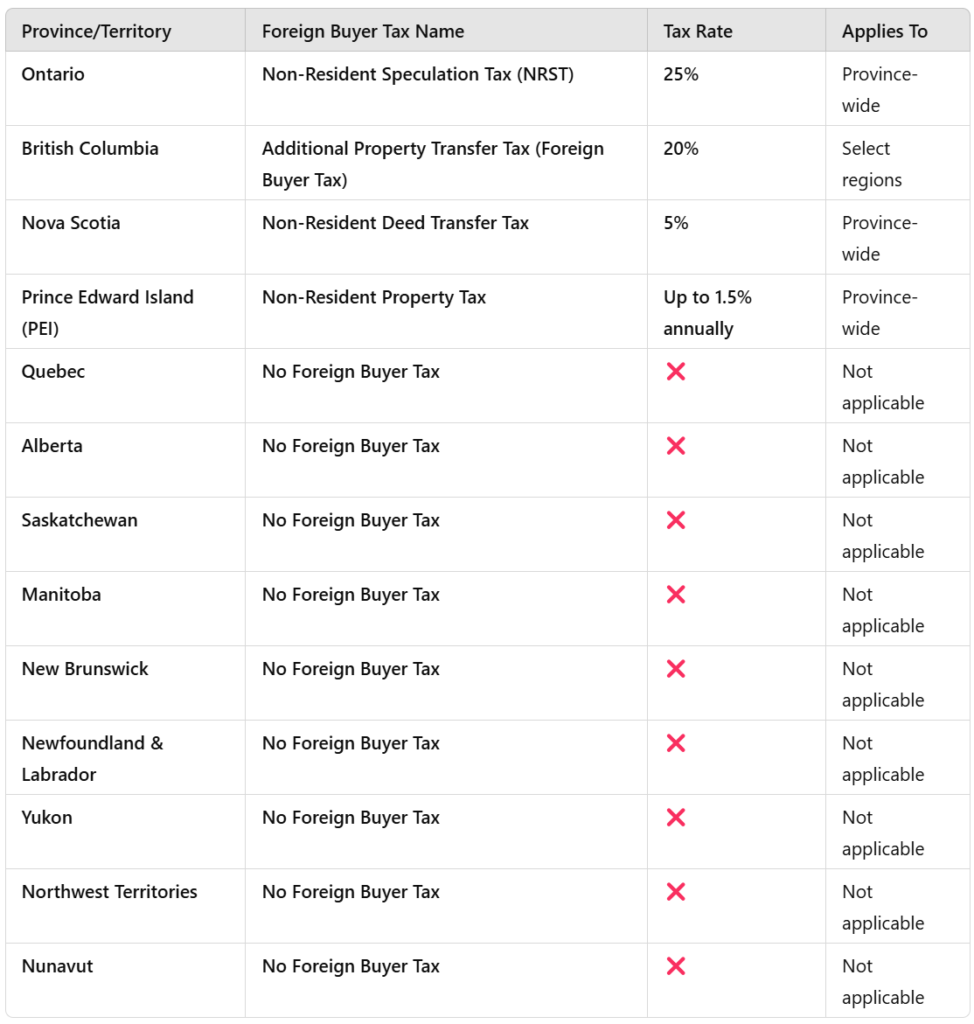
Provincial Taxes
In addition to the Prohibition on the Purchase of Residential Property by Non-Canadians Act, provinces have introduced additional tax measures:
READ MORE
Understanding Ontario’s Non-Resident Sales Tax
Understanding the Federal Ban on Foreign Buyers
Non-Resident Speculation Tax and Mortgage
Non-Resident Speculation Tax Rebate
Summary
Canada’s Foreign Buyer Ban, formally known as the Prohibition on the Purchase of Residential Property by Non-Canadians Act, was enacted in 2023 to curb speculative investment and improve housing affordability for Canadian residents. Initially set to expire in 2025, the ban has been extended to January 1, 2027, restricting non-residents and foreign-controlled corporations from purchasing residential properties in urban areas classified as Census Metropolitan Areas (CMA) or Census Agglomerations (CA). While aimed at major markets like Toronto, Vancouver, and Montreal, certain rural and vacation properties remain exempt.
Foreign buyers include non-Canadian citizens, non-permanent residents, and foreign-controlled corporations, while Canadian citizens, permanent residents, refugees, and protected persons are not subject to the ban. However, some exemptions exist for work permit holders (after three years), international students (after five years), and purchases of multi-unit residential or commercial properties. The ban is enforced by government agencies, with violations resulting in financial penalties and potential forced sales.
In addition to this federal measure, provinces such as Ontario and British Columbia have imposed their own foreign buyer taxes, adding further barriers for non-resident investors. As the 2027 deadline approaches, policymakers will evaluate whether the ban has effectively improved housing affordability or if additional regulatory changes are needed.