The world of home improvement is filled with terminology that often gets misused. One of the most common sources of confusion? The difference between remodeling and renovating. While the terms are frequently used interchangeably, they represent distinct types of home projects. Understanding this distinction is crucial for homeowners, investors, and anyone considering a property upgrade. It impacts everything from costs and timelines to permits, financing, and return on investment (ROI).
Defining Remodeling and Renovating
Structural vs. Cosmetic Changes
Scope of Work: How Extensive Are the Changes?
Examples of Remodeling vs. Renovating in Different Spaces
Costs: Which Is More Expensive?
Impact on Home Value: Which Yields a Higher ROI?
Financing Options for Remodeling vs. Renovating
Appraisal: Renovation vs Remodel
Defining Remodeling and Renovating
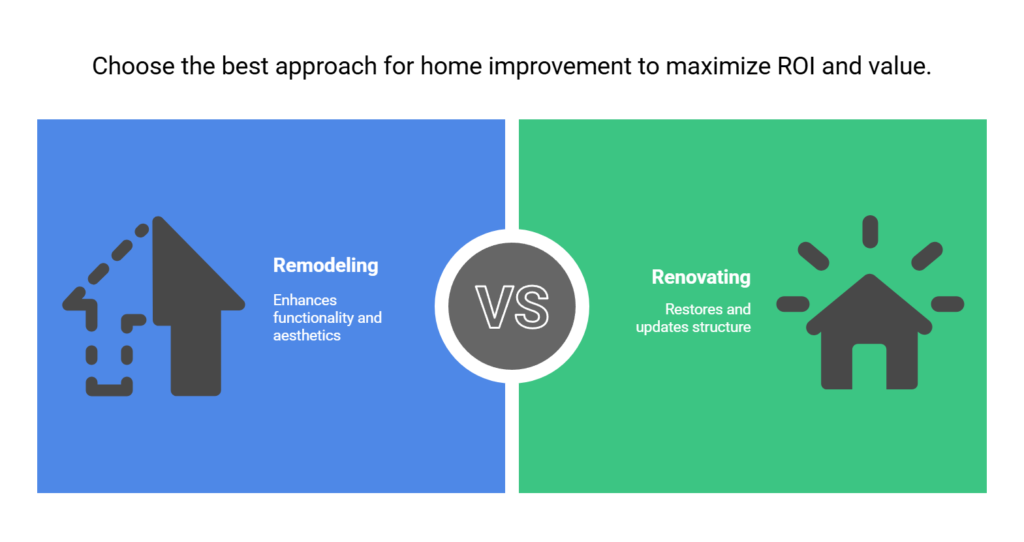
A remodel fundamentally alters a space’s structure or functionality. This could mean knocking down walls, changing plumbing configurations, or reworking the entire layout of a home.
In contrast, a renovation involves refreshing or restoring a space without modifying its original design. Think of a renovation as a facelift—improving the aesthetics while maintaining the existing framework—whereas a remodel is reconstructive surgery, reshaping the space entirely.
Structural vs. Cosmetic Changes
One of the key distinctions between remodeling and renovating is the nature of the changes. Remodeling projects involve modifying structural components, such as altering the home’s floor plan, walls, or mechanical systems (electrical, plumbing, HVAC). Renovations, on the other hand, focus on updating or replacing elements like flooring, cabinets, or fixtures, without making fundamental changes to the layout or structure of the home.
Scope of Work: How Extensive Are the Changes?
The scope of work varies significantly between remodeling and renovating. Remodeling projects often include demolition, reconfiguration, and reconstruction, requiring skilled labour, structural planning, and sometimes engineering. Renovations are typically less invasive, focusing on surface-level improvements such as painting, refinishing, and updating materials. Because renovations are primarily cosmetic, they tend to be more budget-friendly and less time-consuming.
Examples of Remodeling vs. Renovating in Different Spaces
Kitchen
A kitchen remodel might involve expanding the space, removing walls, or altering the plumbing and electrical layout to accommodate a new design. This could include knocking down a wall to create an open-concept kitchen or relocating the sink and stove for better functionality.
In contrast, a kitchen renovation would focus on upgrading cabinets, replacing countertops, installing modern appliances, and refreshing the paint without altering the original structure.
Bathroom
A bathroom remodel might involve changing the layout, expanding the shower, or relocating the plumbing to accommodate a new vanity and tub. This requires extensive work, often involving permits and professional contractors.
A bathroom renovation, on the other hand, could simply mean replacing old tiles, upgrading the lighting, installing modern fixtures, and refinishing the vanity—improving aesthetics without altering the underlying structure.
Living Room & Bedrooms
In the living room or bedrooms, a remodel might involve removing walls to create an open-concept design or adding built-in shelving and a fireplace.
Renovations in these spaces, however, typically involve cosmetic updates such as new flooring, updated lighting, fresh paint, and modernized décor.
Basement
A basement remodel could mean transforming an unfinished basement into a fully functional living space, such as a legal rental suite with a separate entrance, kitchen, and bathroom. This involves significant structural modifications and regulatory compliance.
A basement renovation, on the other hand, might focus on waterproofing, upgrading insulation, installing new flooring, and improving lighting, making the space more comfortable and visually appealing.
Permits and Regulations
Permits play a crucial role in determining whether a project is considered a remodel or a renovation. Remodeling projects almost always require permits, as they involve structural changes that must comply with local building codes. These modifications may affect the home’s safety, requiring inspections from city officials.
Renovations, however, may not require permits unless they involve electrical, plumbing, or extensive exterior work. Understanding local regulations before starting a project is essential to avoid costly legal issues.
Costs: Which Is More Expensive?
Remodeling is generally significantly more expensive than renovating due to the extensive labour, materials, and possible permit requirements. Demolition, structural changes, and new construction all add to the cost.
Renovations, on the other hand, are more budget-friendly since they focus on surface-level improvements rather than foundational changes.
Impact on Home Value: Which Yields a Higher ROI?
Renovations typically provide a higher return on investment (ROI) because they are cost-effective and appeal to a broader range of buyers. Projects like painting, flooring upgrades, and kitchen refreshes offer an immediate boost in home value with minimal investment.
Remodeling, while potentially increasing a home’s functionality and appeal, requires a larger upfront cost. If a remodel does not align with buyer preferences in a particular market, the ROI may not justify the expense.
Financing Options for Remodeling vs. Renovating
Due to the high cost of remodeling, many homeowners use home equity loans, refinancing, or construction loans to fund major projects.
Renovations, being less expensive, are often financed through home equity lines of credit (HELOCs), personal savings, or credit cards. Choosing the right financing option depends on the project’s scale and the homeowner’s long-term goals.
Appraisal: Renovation vs Remodel
Appraisers assess home value based on comparables (similar properties in the area). Renovations generally provide a more predictable increase in value because they align with market expectations.
Remodeling projects, depending on their scope, may or may not provide a significant appraisal boost, especially if the costs exceed the value added.
Summary
Understanding the distinction between remodeling and renovating is essential for homeowners, investors, and anyone considering a property upgrade. While both improve a home, they differ in scope, cost, and impact on value.
Remodeling involves structural or functional changes, such as altering a floor plan, moving plumbing, or converting a basement into a legal rental unit. In contrast, renovating focuses on refreshing existing features—like upgrading flooring, repainting walls, or replacing cabinetry—without modifying the home’s original layout.
Remodeling projects tend to be more expensive, time-consuming, and permit-intensive, whereas renovations are generally budget-friendly and offer a higher return on investment (ROI) due to their broad market appeal. Homeowners should also consider financing options, as remodels often require home equity loans or refinancing, while renovations can be funded through HELOCs or savings.
From an appraisal perspective, renovations typically provide a more predictable increase in home value, while remodels may or may not yield a significant financial return, depending on the project’s cost versus market demand.