A Licensed Insolvency Trustee (LIT) is a federally licensed professional in Canada authorized to administer bankruptcies and consumer proposals under the Bankruptcy and Insolvency Act (BIA). Formerly known as bankruptcy trustees, LITs serve as impartial professionals whose primary role is to help individuals and businesses facing significant financial challenges navigate insolvency processes clearly, fairly, and responsibly.
What Does a Licensed Insolvency Trustee Do?
Who Licenses and Regulates Licensed Insolvency Trustees?
When Should You Consult a Licensed Insolvency Trustee?
Costs and Fees of Licensed Insolvency Trustees
Benefits of Using a Licensed Insolvency Trustee
What Does a Licensed Insolvency Trustee Do?
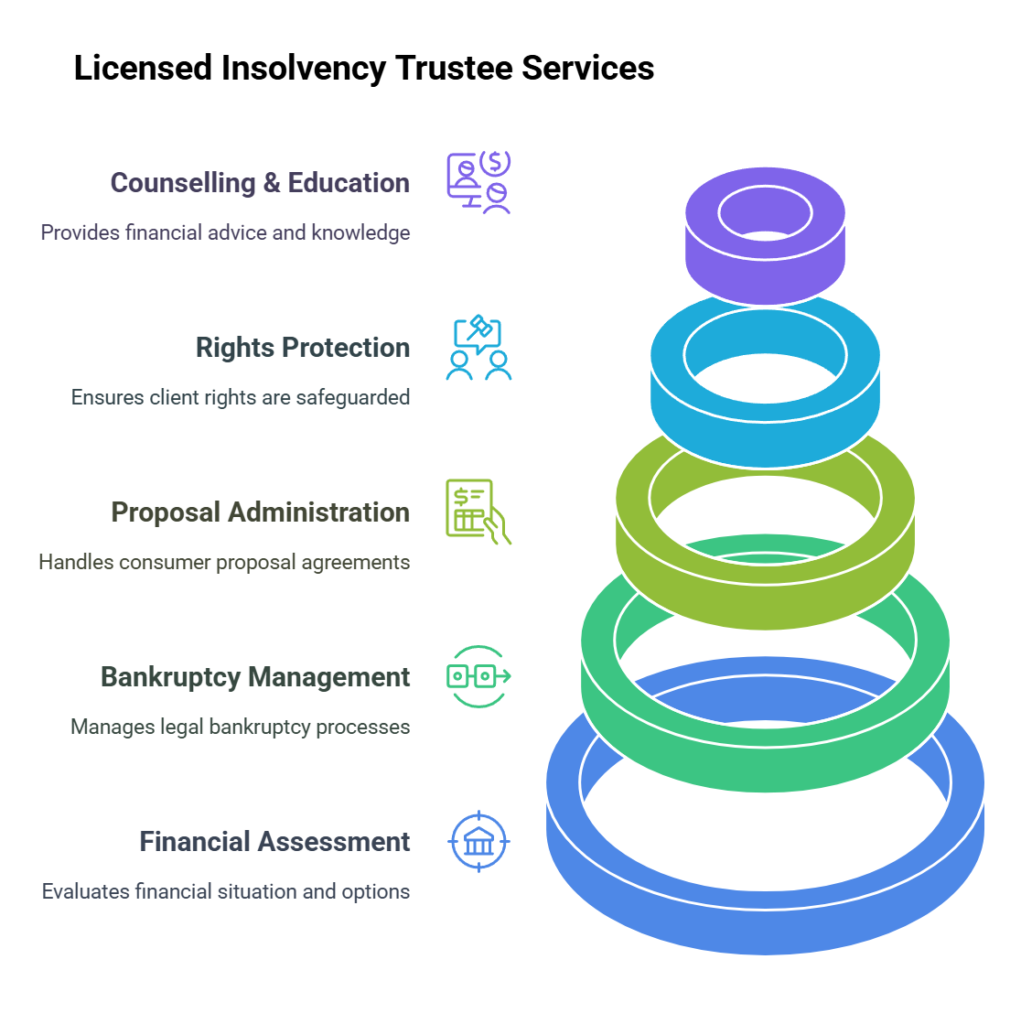
A Licensed Insolvency Trustee is responsible for:
- Financial Assessment and Guidance
- Administering Bankruptcies
- Administering Consumer Proposals
- Protecting Your Rights
- Protecting Your Rights
- Financial Counselling and Education
Financial Assessment and Guidance
LITs provide a thorough assessment of an individual’s or business’s financial situation, reviewing income, debts, assets, and other obligations. After this evaluation, the trustee advises on appropriate debt-relief options, including bankruptcy, consumer proposals, debt management solutions, or credit counselling referrals. They clearly explain the implications and potential outcomes of each option, enabling informed decision-making.
- Provides a detailed review and analysis of your financial situation (income, debts, assets, and obligations).
- Advises on appropriate debt-relief options including:
- Bankruptcy
- Consumer proposals
- Debt management solutions
- Debt counselling or credit counselling referrals
- Clearly explains implications of each choice to ensure informed decision-making.
Administering Bankruptcies
Licensed Insolvency Trustees administer bankruptcy proceedings. They prepare and file official bankruptcy documents with the government, immediately implementing a legal stay of proceedings. This stay of proceedings halts all creditor actions such as debt collection calls, wage garnishments, foreclosures, or lawsuits. Trustees also liquidate non-exempt assets when applicable, distributing the proceeds fairly among creditors. Throughout the process, they manage communications with creditors to ensure fairness and transparency.
- Prepares and files bankruptcy documents officially with the government.
- Immediately implements a stay of proceedings, legally halting creditor actions like collections, lawsuits, garnishments, and foreclosures.
- Liquidates any applicable non-exempt assets to repay creditors fairly.
- Manages creditor communication, ensuring that all inquiries and negotiations are handled professionally.
Administering Consumer Proposals
LITs administer consumer proposals, which are formal, legally binding agreements between debtors and creditors. A Licensed Insolvency Trustee helps debtors draft proposals that reflect affordability and fairness. They negotiate directly with creditors to achieve acceptance of the proposal, manage the repayment schedules, and ensure ongoing compliance.
- Works with debtors to draft fair repayment proposals to creditors based on affordability and reasonability.
- Negotiates directly with creditors on your behalf, striving for mutual agreement.
- Oversees regular payments from the debtor to creditors, ensuring compliance.
Protecting Your Rights
Licensed Insolvency Trustees play a crucial role in protecting debtor rights. As neutral intermediaries, they ensure creditors follow all relevant legal procedures and that debtors are treated fairly and respectfully. Trustees mediate disputes between debtors and creditors professionally and impartially, ensuring all parties are aware of their rights and obligations under the law.
- Acts as a neutral intermediary, ensuring creditors follow the legal process, and safeguards the debtor’s rights and dignity.
- Resolves disputes between creditors and debtors professionally and impartially.
Financial Counselling and Education
Licensed Insolvency Trustees provide financial counselling and education as part of insolvency proceedings. They conduct mandatory counselling sessions to help debtors improve financial literacy, develop stronger money management skills, and rebuild credit. Trustees provide practical strategies designed to help debtors avoid future debt problems and establish long-term financial stability.
- Conducts mandatory counselling sessions for debtors, helping them improve financial literacy and build stronger financial management skills.
- Provides strategies to rebuild credit and avoid future debt problems.
Who Licenses and Regulates Licensed Insolvency Trustees?
Licensed Insolvency Trustees are licensed and regulated by the Office of the Superintendent of Bankruptcy (OSB), a federal agency that falls under the oversight of Innovation, Science and Economic Development Canada. This strict federal oversight ensures trustees adhere to high ethical standards, practice transparency, and carry out their responsibilities competently.
When Should You Consult a Licensed Insolvency Trustee?
Individuals should consult a Licensed Insolvency Trustee when they can no longer manage their monthly debt obligations, have debts substantially exceeding their ability to repay, or face aggressive collection actions such as wage garnishments or legal threats. Trustees offer objective, professional guidance and help evaluate all available financial solutions clearly and thoroughly.
Costs and Fees of Licensed Insolvency Trustees
Initial consultations with Licensed Insolvency Trustees are usually provided free of charge. Bankruptcy and consumer proposal fees are regulated and set by federal law through the OSB. These fees are typically paid from funds generated within the bankruptcy estate or as part of consumer proposal payments rather than directly upfront by debtors.
Costs and Fees for Consumer Proposals
When filing a consumer proposal, the trustee’s fees are standardized, clearly defined, and included within your negotiated monthly payments.
Typical Fees Include:
- An initial administration fee set by the OSB (usually around $750 to $1,500, depending on proposal size and complexity).
- A percentage of payments distributed to creditors (typically about 20%).
- Mandatory government levy charged by OSB (approximately 5% of creditor distributions).
How Fees Are Paid:
- The LIT’s fees and associated costs are included directly in your monthly consumer proposal payments.
- You make a single monthly payment to your trustee, who deducts the regulated fees and remits the remainder to creditors.
- There are no additional upfront or hidden fees; everything is transparent and accounted for in your proposal.
Costs and Fees for Bankruptcy
In personal bankruptcy cases, trustee fees are determined by federal guidelines and depend on the amount collected from the bankrupt estate or through monthly payments (called surplus income payments).
Typical Fees Include:
- Basic Administration Fee: Set by the OSB, usually starting around $1,800 to $2,000 for a straightforward bankruptcy.
- Surplus Income Payments: If you earn more than a minimum set amount based on family size, you must contribute monthly surplus income payments to your trustee. These payments form part of the trustee’s fees and creditor repayments.
- Asset Realization Fee: If you have non-exempt assets liquidated during bankruptcy, trustees receive a percentage fee for managing the sale and distribution.
How Fees Are Paid:
- Trustee fees are typically paid from the funds collected through surplus income payments and liquidated assets (if applicable).
- In simpler bankruptcies with minimal or no surplus income or assets, the debtor makes fixed monthly payments directly to the trustee (usually $200–$250 per month over 9 months for a first-time bankruptcy), which cover administration fees.
- Debtors do not pay additional upfront fees beyond these agreed monthly payments.
Benefits of Using a Licensed Insolvency Trustee
Engaging a Licensed Insolvency Trustee provides numerous benefits. Trustees offer professional, transparent, and legally regulated advice, providing access to insolvency solutions that are not available through other financial advisors or debt counselling services. By working with a trustee, individuals and businesses facing overwhelming debt gain immediate protection from creditors and a structured path toward financial relief and recovery.
Summary
A Licensed Insolvency Trustee serves a critical and legally regulated role within Canada’s insolvency system. By consulting a LIT, Canadians struggling with debt can receive clear, professional, and trustworthy guidance, ensuring they navigate bankruptcy or consumer proposal processes effectively and confidently toward a stable financial future.