
Mortgage Terms
Get a Better Understanding of Mortgages!







Ontario Land Transfer Tax Rebate Explained
Imagine you and your partner are excited to buy your first home in Ontario. You spend your weekends looking at homes, dreaming of your future, and planning your perfect space. But then, you start to worry about the extra costs, like the land transfer tax. That's when...

Non-Permanent Residents Can Buy Homes
If you’re living in Canada on a work permit or study permit and wondering if homeownership is even on the table, I’ve got good news: yes, you absolutely can buy a home. You don’t have to wait until you’ve got your Permanent Resident (PR) card in hand. But — and this is a big but — there are a few important things you need to understand about how lenders look at non-permanent residents (NPRs), how mortgages work for you, and what’s required to make it happen.

Want to Pay Off Your Mortgage Faster?
If you’re like most homeowners, the thought of shaving years — and thousands of dollars in interest — off your mortgage is pretty appealing. You want that debt gone sooner so you can enjoy more freedom, more flexibility, and less financial pressure. The good news? You don’t have to win the lottery or double your income to do it. Sometimes, it’s as simple as tweaking how often you make your payments.

What’s Your Income Story?
Once upon a time, mortgage applications were simple: you worked a 9-to-5 job, had a steady salary, and lenders barely batted an eye. Fast forward to today’s economy — people wear multiple hats, juggle side gigs, pick up overtime, and sometimes work more than one job to make ends meet or get ahead.

The Truth About “Limited Feature Mortgages”
We’ve all seen them — those ultra-low mortgage rates advertised by the big banks or online lenders. They’re tempting, no doubt about it. Who doesn’t want to save a few bucks on interest? But here’s what you might not realize: those “basic,” “no-frills,” or “limited feature” mortgages come with some fine print that can cost you more down the road than you save upfront.
Who Owns the Appraisal?
If you’ve ever gone through a mortgage process and found yourself wondering, “Wait, I paid for that appraisal—why won’t the lender give me a copy?” you’re not alone. This is one of the most common sources of confusion and frustration among homebuyers, homeowners, and even some realtors. It feels like you should have a right to it, right? After all, you footed the bill!

Why Your Mortgage Rate is Tied to Bay Street
Ever wonder why mortgage rates seem to jump overnight even though you’ve done everything right? It can feel like the lender’s just making it up as they go along—but trust me, they’re not. What’s really happening behind the scenes is tied to something you might not think about: bonds and the capital markets.
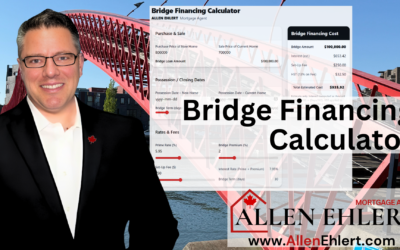
Ultimate Canadian Bridge Financing Calculator
Bridge Financing Calculator: If you’ve ever bought and sold homes at the same time, you know it can feel like trying to juggle with oven mitts on. Point-to-point moves are fraught with danger, and they never come off without a hitch. So you get smart and decide you need bridge financing. Or maybe you’ve got your sale closing a week (or sometimes even a month) after your purchase, and the question hits: How the heck am I going to cover owning two properties at once if I even can?
Bank’s Collateral Mortgage Trap
Collateral Mortgage: When you sit down at a bank to sign your mortgage, everything sounds great. The rate seems OK, the approval was smooth, and the representative mentions, “We’re registering your mortgage as a collateral charge — that way, you’ll have room to borrow more later!”
Sounds harmless, right? Maybe even smart.

ACE at Scotiabank
If you’ve ever been knee-deep in a mortgage application and suddenly heard someone at the bank say, “This needs to go to ACE,” you might have felt your stomach drop. Don’t worry—it’s not a bad thing. In fact, at Scotiabank, ACE stands for Adjudication Centre of Expertise, and it’s their in-house team that takes a second look at mortgage files that fall just outside the usual approval box.
Understanding EDD in Mortgage Underwriting
You’ve probably heard the phrase “the devil’s in the details”—and in the mortgage world, that detail often shows up as something called EDD, or Enhanced Due Diligence. It sounds intimidating, almost like you’re being audited, but it’s not what most people think.
A Better Collateral Mortgage
Collateral mortgages have become the default product for many of Canada’s largest banks. The concept isn’t inherently bad—it’s just designed more for the lender’s convenience than for the borrower’s benefit. But what if it didn’t have to be that way? What if collateral mortgages were restructured to genuinely help homeowners while maintaining the flexibility lenders want?

Commercial General Security Agreements
Commercial General Security Agreements: When you step into the world of commercial mortgage lending, you’ll quickly realize that lenders don’t just take comfort in the property—they want the whole package. Unlike residential lending, where the home itself is the sole collateral, commercial lenders secure every possible thread that ties a business to its loan. One of the most important tools they use to do that is the Security Agreement.

Personal Property in Commercial Mortgages
Personal Property Commercial: When you’re diving into the world of commercial mortgages, you’ll notice that lenders don’t just look at the bricks and mortar—they look at the business that operates within them. And to protect their loan, they often take security over more than just the property itself. That’s where the General Security Agreement, or GSA, comes in.

Why Seniors Don’t Downsize
For decades, planners and real estate experts figured seniors would sell their big family homes, scoop up a condo, and ride off into a care-free retirement. But that’s not happening. Instead, most seniors are staying put—keeping their homes and choosing comfort, familiarity, and independence over the stress of moving.

Understanding Personal Property Security Acts
Personal Property Security Act: When it comes to commercial mortgages, most people think about property appraisals, rent rolls, or debt service ratios. But behind the scenes, there’s another piece of the puzzle that quietly keeps lenders and borrowers playing fair—the Personal Property Security Act, or PPSA.

Why Estoppel Certificates Matter
Estoppel Certificate: If you’ve ever been involved in financing a commercial property—especially one with tenants—you’ve probably heard someone mention an estoppel certificate. It’s one of those documents that sounds a bit old-fashioned, but in the world of commercial mortgages, it’s pure gold.

Commercial Lease Weaknesses
Weak Commercial Lease: When it comes to commercial real estate, you can have a great property, solid tenants, and even a healthy rent roll — but if your leases have hidden landmines, your financing could fall apart faster than you can say “commitment letter.”

Want to Pay Off Your Mortgage Faster?
If you’re like most homeowners, the thought of shaving years — and thousands of dollars in interest — off your mortgage is pretty appealing. You want that debt gone sooner so you can enjoy more freedom, more flexibility, and less financial pressure. The good news? You don’t have to win the lottery or double your income to do it. Sometimes, it’s as simple as tweaking how often you make your payments.

When a Lender Works in Your Favour
If you’ve ever had that sinking feeling after locking in a mortgage rate—only to see rates drop a few weeks later—you’re not alone. It’s one of the quirks of mortgage shopping: you want protection from rising rates, but you don’t want to be stuck paying more if rates take a dive.

Can a Lender Really Pull a Rate Hold?
If you’ve ever sat down with a client—or maybe you’re the one house hunting—and thought, “Phew, I’ve got my rate locked in, I’m good to go!”… I hate to break it to you, but it’s not quite that simple. There’s a lot of misunderstanding in the market around what a rate hold actually is, and more importantly, what it isn’t.

Commercial Leases and Mortgages
Commercial Lease and Mortgage: When it comes to commercial real estate, most people think of two separate worlds — the lease and the loan. One defines how a business occupies a property; the other defines how the property is financed. But here’s the truth that many overlook: these two worlds are deeply intertwined.
Featured Publications
Articles
- Extended Amortizations and Hypothetical Calculations
Office of the Superintendent of Financial Institutions (OSFI) - Minimum Qualifying Rate for Uninsured Mortgages
Office of the Superintendent of Financial Institutions (OSFI) - Residential Mortgage Underwriting Practices and Procedures
Office of the Superintendent of Financial Institutions (OSFI) - Guideline on Existing Consumer Mortgage Loans in Exceptional Circumstances Financial Consumer Agency of Canada
Book: “The Program”
- Part 1 – Building Your Down Payment
- Part 2 – Mortgage Payoff Strategies
- Part 3 – Building Wealth Through Real Estate