Articles











What is a Net Worth Program?
Learn what a Net Worth Program is and how it assists individuals with substantial net worth to qualify for a mortgage.
Developing a Business Owner Mindset
Let’s be honest—real estate isn’t a job. It’s a business. But far too often, realtors enter the profession with the habits and mindset of an employee, not an entrepreneur. You show up, expect answers, and wait for someone to give you direction. And it’s not your fault—many brokerages (and even some team leads) unknowingly foster this “just ask me” culture.

Co-op Appropriate Use
Co-ops don’t work like condos — not in how they’re owned, not in how they’re financed, and definitely not in how they’re used. And if you’re planning on leveraging the property to generate rental income or make investment plays, you need to understand this right now:

How to Move from Ontario to Alberta
Here is the situation: A single woman wants to move from Ontario to Alberta. She has saved $150,000, has a good credit score, and wants to buy a 4-bedroom, 3-bathroom, 1600 sq ft bungalow in Edmonton that presently goes for $500,000. She needs a $350,000 mortgage. The...

Canada’s Financial Snapshot
Whether you’re renewing, refinancing, or getting ready to jump into homeownership, let’s sit down and chat about something that directly affects your financial future: Canada’s financial landscape. Think of this as our casual coffee chat—packed with important info, minus the confusing jargon.

Mortgages for Co-Ops
The idea of a co-op might raise an eyebrow. You’ve probably heard the term before, maybe in a Manhattan movie — but in Canadian real estate? Not so common. And the truth is, financing a co-op isn’t quite the same as getting a regular condo mortgage. So let’s walk through what makes them different, what lenders look for, and how you can still make it happen if you’ve got your heart set on one.

Realtor Bias: Sabotaging Thoughts
You’ve walked a thousand clients through negotiations, listings, and mortgage options. You’re no rookie. But here’s the kicker: even the most seasoned real estate pros fall into mental traps—cognitive biases—without realizing it. These biases aren’t about intelligence. They’re about how our brains are wired to shortcut decisions.

Realtors Doing the Hard Things
Every realtor I know has a hustler’s heart. You show up. You grind. You prospect, follow up, and juggle a dozen balls in the air while smiling through it all. But if we’re being honest—and we should be—there’s a layer beneath the open houses and social media reels where the real work lives. It’s not about marketing or mortgage math. It’s about doing the hard things: the gut-wrenching, emotionally taxing decisions and conversations that separate the merely successful from the truly exceptional.

How to Introduce Yourself as a Realtor
Ever walk into a networking event, open house, or even a coffee shop meeting and think, “How do I start this without sounding like I’m trying too hard?” We’ve all been there. Introducing yourself as a realtor—authentically and memorably—is one of those social skills that’s simple on the surface but can make or break your first impression.

How to Handle Introduction Rejection
Let’s be real—as a realtor, you walk into a lot of rooms. Some are warm and welcoming. Others? Ice cold. You say your name, flash your smile, extend a hand… and you get a nod, a grunt, or worse, a look past your shoulder like you’re invisible. It stings. But if you’re going to thrive in this business, you need to know how to bounce back from these chilly introductions without letting them eat you alive.

The Impact of Rejection on a Realtor’s Self-Esteem
There’s no sugarcoating it—rejection stings. And in real estate, it’s everywhere. Clients who ghost. Listings you lose. Open house visitors who never call back. Even colleagues who barely nod when you introduce yourself at an event. If you’ve ever felt like you’re taking hit after hit, you’re not alone. It’s not just a bad day—it can feel like a slow erosion of your confidence. And when rejection becomes routine, it doesn’t just impact your business—it wears on your self-worth.

How to Be a More Likeable Realtor
When you think about being a successful realtor, charisma and likeability might not be the first traits that pop into your head—but they absolutely should be. Picture yourself stepping into a room full of potential clients; the way you walk, talk, gesture, and even tilt your head can dramatically affect how people perceive you. But don’t worry! Even if you’ve never thought of yourself as the charismatic type, science-backed strategies can transform you into the realtor people can’t wait to call again.

Turning Realtor Activity Into Flow
You know those days where everything just clicks? You’re dialed in, the calls are smooth, the showings are crisp, and your clients are hanging on your every word like you’re reading from a script they didn’t even know they wrote. That feeling—that seamless, focused zone where you forget the clock exists—isn’t a fluke. It’s called flow. And no, it’s not just something for elite athletes or TED Talkers. You, as a realtor, can access it, build it, and live in it far more often than you think.

Turning Realtor Errors Into Insight
There’s nothing like the sting of a botched listing presentation or a deal-killer clause you missed in the agreement to make you mutter, “Seriously, again?” But what if every flub—big or small—wasn’t proof you’re doomed to repeat history, but rocket fuel for the seasoned, resilient pro you’re becoming? Let’s dive into how your brain is wired to convert miscues into mastery and how you, as a realtor, can ride that wiring to the bank (and the closing table).

Why Can’t We Build Homes
“Supply, supply, supply.”
If you’ve spent any time in the world of Canadian housing policy—or if you’ve even just watched the evening news—you’ve probably heard that phrase tossed around as the magic bullet to solve our housing crisis. But here’s the real question: If we all agree that we need more homes, why can’t we just build them?

Hidden Housing Costs: Provincial Downloading
We talk a lot about high home prices in Ontario—land costs, construction costs, interest rates. But there’s a quieter, less visible factor that doesn’t get enough airtime: provincial downloading.
In plain terms, downloading is when the provincial government offloads responsibilities and costs onto municipalities—without providing the funding to go with it. And when municipalities are left holding the bill, they turn to one of the few revenue tools they have: development charges.

Provinces Make Housing Expensive
If you’ve ever wondered why Ontario’s cities are straining to pay for everything from public housing to transit to stormwater pipes, the answer lies in a quiet but powerful political strategy called “downloading.” It’s the art of pushing responsibility down the ladder—without sending the dollars to match.

Understanding Your Debt Relief Options
Managing overwhelming debt can feel intimidating, but Canada offers several debt-relief solutions tailored to varying financial situations. Each option comes with distinct implications for your credit score and overall financial health. Here, we outline key...

5 Reasons to Escape The Rent Trap
Renting can offer advantages over buying, such as flexibility, lower upfront costs, and freedom from maintenance responsibilities. However, for most people, renting is not a lifestyle choice; it is an economic necessity. Most people would buy something if they could....

Ever Consider a Co Op?
let me introduce you to an underrated gem that’s been quietly helping people live affordably for decades: co-operative housing — or co-ops, for short.

TD Replacement Policy
A Mortgage Planning Gem Let me tell you — if you're a mortgage nerd like me (and I say that with love), then TD’s replacement policy is one of those golden tools that doesn’t get enough spotlight but can make a world of difference when you know how to use it. So,...

The Dash for Cash
In the Bank of Canada Staff Discussion Paper 2025-5, titled Will Asset Managers Dash for Cash? Implications for Central Banks, economic researchers discuss how asset managers play a crucial role in financial markets, managing trillions of dollars in securities and...

“Will I Get Paid?” What Realtors Need to Know
If you’ve ever sold a home that came with more drama than a Real Housewives reunion, you know how messy things can get when there’s more debt on the property than equity. And if your client has a first mortgage, a second mortgage, and took out some equity to help the kids — well, we’re already in “handle with care” territory.

Best Smith Manoeuvre Mortgage
Comparing BMO Homeowner ReadiLine, Scotiabank STEP, and TD Equity FlexLine The Smith Maneuver is a popular financial strategy in Canada designed to convert non-deductible mortgage debt into tax-deductible investment debt, helping homeowners accelerate wealth creation...

Who are Canada’s Mortgage Investment Corporations?
Mortgage Investment Corporations (MICs) are specialized investment and lending companies in Canada that provide an alternative source of mortgage financing.

What is a Debt Management Plan?
Did you know 73% of Canadians have some debt? The average household debt is $1.77 for every dollar of disposable income. This shows the need for good debt relief in Canada. A debt management plan is a strong tool to help you manage your finances and work towards being...

How I Advocate for You
When you apply for a mortgage, especially if your situation is a little outside the box, it’s easy to feel like you’re just another number. Credit score, income, debts, down payment… it all goes into a formula. But behind that formula is you — your story, your goals, your unique circumstances.
That’s where I come in — not just to gather your documents and punch in the numbers, but to advocate for you. One of the most important tools I use to do that is something called a submission note.

In Defence of NIMBYism
When homeowners resist changes to their neighbourhoods—particularly the addition of multi-family housing in established single-family areas—they’re often labelled with a pejorative acronym: NIMBY, or “Not In My Back Yard.” The term implies selfishness or resistance to progress. But in reality, the NIMBY instinct is not only understandable—it is grounded in centuries of legal tradition, economic rationale, and the very nature of what it means to own property in a commonwealth nation like Canada.

What is a Licensed Insolvency Trustee?
A Licensed Insolvency Trustee (LIT) is a federally licensed professional in Canada authorized to administer bankruptcies and consumer proposals under the Bankruptcy and Insolvency Act (BIA). Formerly known as bankruptcy trustees, LITs serve as impartial professionals...

Applying for a Mortgage: Letter of Employment
A letter of employment is a fundamental document required during mortgage applications in Canada. It provides lenders with critical information about a borrower's income stability, employment status, and financial reliability. Mortgage providers use this letter to...

Foundations Impact Mortgages
A house foundation is the structural base that supports a home, distributing its weight evenly and providing stability against shifting soil, moisture, and environmental conditions. In Canada, where climate and soil composition vary widely, the choice of foundation...

Notice of Assessment and Your Mortgage
In Canada, a Notice of Assessment (NOA) is an official document issued by the Canada Revenue Agency (CRA) after processing an individual’s or corporation’s tax return. It summarizes the taxpayer’s income, tax liabilities, credits, and any amounts owed or refundable....

Mortgage Scenario: Self Employed Man Meets Employed Woman
Imagine a man and a woman want to get a mortgage to buy a house. The man has a dry wall business where he doesn't pay himself much to keep his income taxes down, and the woman is a full-time permanent dental hygienist. Should they apply for a mortgage under a prime...

Why Listings Are Killing the Market
The Paradox of Choice is a concept popularized by psychologist Barry Schwartz in his book “The Paradox of Choice: Why More Is Less.” It refers to the phenomenon where having too many options leads to decision paralysis, increased anxiety, and dissatisfaction—rather than greater freedom or happiness.

How Long at a Job?
One of the most common questions homebuyers ask when applying for a mortgage is, "How long do I need to be at my job to qualify?" Prime lenders assess employment history as a key factor in determining a borrower's financial stability and ability to make mortgage...

Understanding a Mortgage Discharge Statement
Did you know over 65% of Canadian homeowners have a mortgage? Many don't know how important the mortgage discharge statement is. This document is key to ending your mortgage and settling your financial duties. As you near the end of your mortgage, it's crucial to...

10 Ways Development Costs Impact Real Estate
Development costs refer to the expenses incurred in the process of developing a property. These costs can be quite extensive and vary greatly depending on the project's scale, location, type of development, and other factors. Here's a breakdown of typical development...
Featured Publications
Articles
- Extended Amortizations and Hypothetical Calculations
Office of the Superintendent of Financial Institutions (OSFI) - Minimum Qualifying Rate for Uninsured Mortgages
Office of the Superintendent of Financial Institutions (OSFI) - Residential Mortgage Underwriting Practices and Procedures
Office of the Superintendent of Financial Institutions (OSFI) - Guideline on Existing Consumer Mortgage Loans in Exceptional Circumstances Financial Consumer Agency of Canada
Book: “The Program”
- Part 1 – Building Your Down Payment
- Part 2 – Mortgage Payoff Strategies
- Part 3 – Building Wealth Through Real Estate
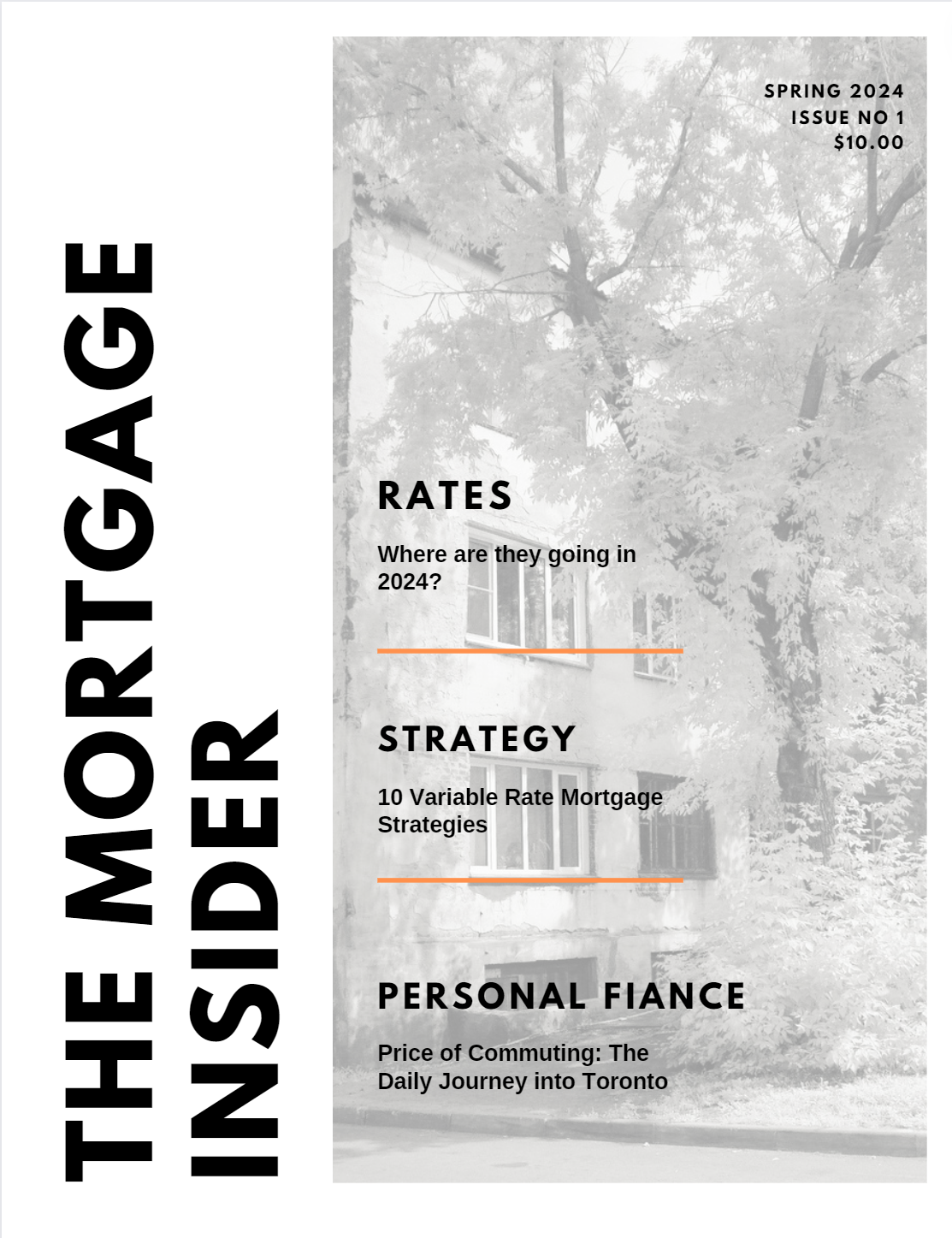
Get a free subscription to “The Mortgage Insider” containing rate updates and financial strategies!